


.png)


1. Introduction
Australia's restaurant and café industry is undergoing rapid digital transformation in 2025. From Melbourne's bustling cafés to regional restaurants across New South Wales, customer expectations have shifted dramatically. Diners now demand mobile-first experiences, real-time delivery tracking, and personalized recommendations, making digital solutions essential for businesses that want to remain competitive.
While platforms such as Uber Eats, Menulog, and DoorDash have accelerated online food ordering, many Australian restaurants remain heavily dependent on these third-party marketplaces. This often comes with challenges including high commission fees, limited branding opportunities, and restricted access to customer data.
As a result, more restaurants and startups are exploring custom food delivery apps built with platforms like FlutterFlow. By owning their digital platforms, businesses gain greater control over customer experiences, pricing strategies, promotions, and brand identity—while building stronger customer relationships and improving long-term profitability.
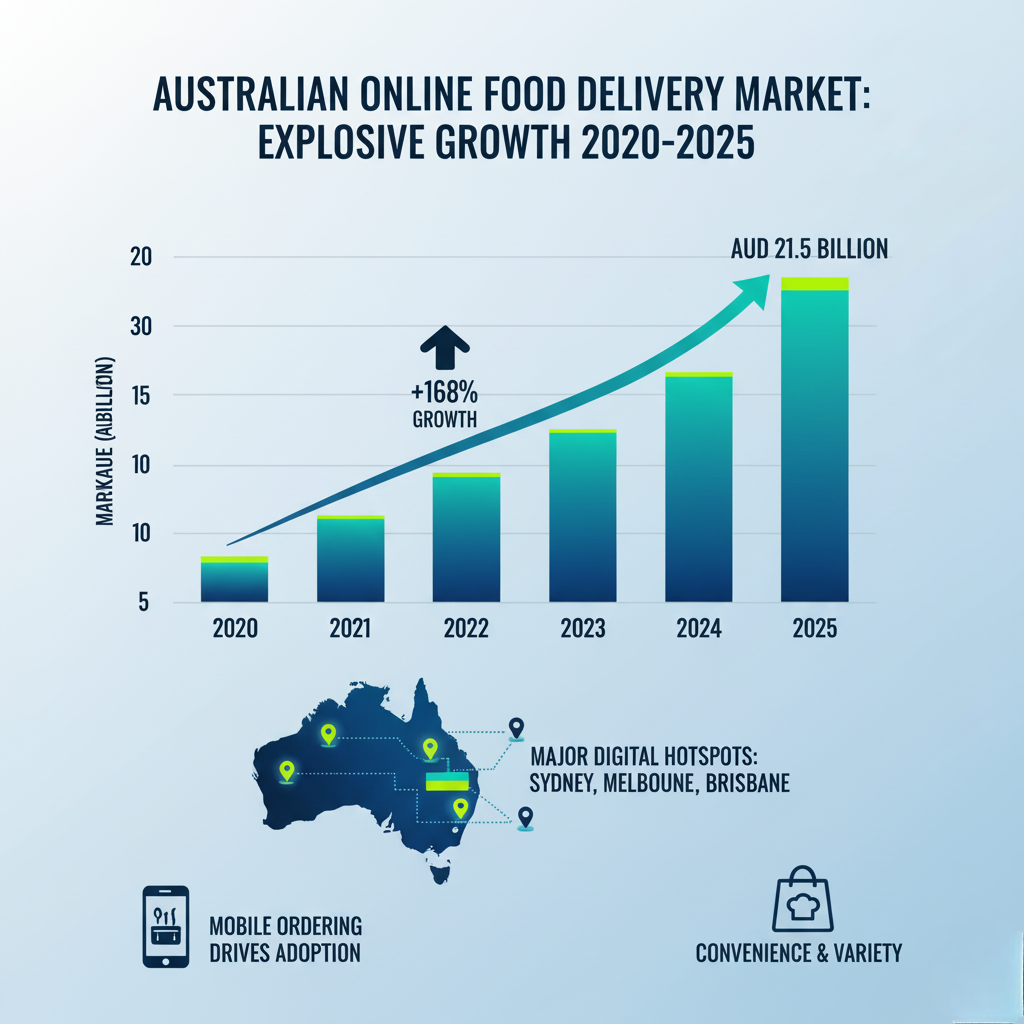
As a result, having a branded restaurant and delivery app is no longer a luxury for Australian restaurants—it's a strategic necessity. A custom app allows businesses to deliver personalized experiences, manage menus and promotions, launch loyalty programs, and gain valuable customer insights without relying on third-party platforms.
With no-code solutions like FlutterFlow, restaurants and startups can build high-quality apps faster and at a lower cost than traditional development. Features such as AI-powered recommendations, loyalty rewards, and analytics can be integrated seamlessly while maintaining compliance with Australian regulations.
As competition intensifies, restaurants that embrace digital ownership will be better positioned to grow and retain customers. Whether in Sydney, Melbourne, Brisbane, or regional Australia, a custom food delivery app empowers businesses to strengthen their brand, improve operations, and create exceptional customer experiences.
In this guide, we'll explore how Australian restaurants and startups can leverage FlutterFlow to design, build, and launch scalable food delivery apps that drive long-term growth.
2. What Australian Users Expect from a Delivery App in 2026
By 2026, Australian consumers will expect their food delivery apps to provide fast, seamless, and intuitive experiences when ordering from a restaurant. Whether you’re ordering a coffee in Melbourne, a sushi platter in Sydney, or a burger in Regional Queensland, users expect an app that does more than simply process an order. To build a restaurant and delivery app in Australia that competes effectively, it is crucial to understand what consumers expect from a FlutterFlow food delivery app in Australia.
2.1 Quick and Easy Ordering Process
Australian consumers want the ordering process to be quick and frictionless. A FlutterFlow food delivery app in Australia allows you to design intuitive navigation, clear category headings, item images, and detailed product descriptions, ensuring customers can make informed decisions quickly. Implementing these restaurant app features for Australian startups will streamline the user experience and encourage repeat usage.
2.2 Live Updates of Order Status
Consumers expect real-time updates on their orders, including preparation time and delivery tracking. Integrating live status updates in a no-code food delivery app for Australian restaurants builds trust and reduces customer inquiries, improving the overall experience. A FlutterFlow food delivery app in Australia can easily support real-time tracking and dynamic status updates, keeping customers engaged and informed.
2.3 Suggestions Based On Your Preferences
AI-powered suggestions are becoming standard. Apps that provide personalized recommendations based on past purchases or preferences increase engagement and average order value. For example, a café app might suggest a vegan wrap to a customer who regularly orders plant-based foods. Including restaurant app features for Australian startups, such as AI-driven recommendations in your FlutterFlow food delivery app in Australia, helps create a smarter, more engaging user experience.
2.4 Customer Reward and Loyalty Program
Australians love rewards. By integrating a loyalty program, customers can earn points, unlock special offers, or access new menu items. No-code food delivery apps for Australian restaurants can implement these loyalty programs efficiently, improving customer retention and encouraging repeat orders. A FlutterFlow food delivery app in Australia makes it easy to manage and track rewards, providing both customers and restaurant owners with a seamless experience.
2.5 Multi-Method Payments
While multiple currencies aren’t necessary, consumers expect flexible payment options in AUD, including credit/debit cards, Apple Pay, Google Pay, and digital wallets. Implementing multiple payment methods to build a restaurant and delivery app in Australia ensures a positive user experience and increased order completion rates.
2.6 Contactless and Safe Dining
Post-pandemic, Australian consumers appreciate contactless delivery, QR menus, and cashless payments. A FlutterFlow food delivery app in Australia can easily integrate these restaurant app features for Australian startups, providing safe and convenient options for dine-in or takeaway customers.
2.7 Offline / Remote Capability
Connectivity in rural and regional Australia can be intermittent. A successful no-code food delivery app for Australian restaurants should cache menus, save order details, and synchronize data once connectivity returns, ensuring seamless performance across urban and remote locations. This makes it practical for all the customers to build a restaurant and delivery app in Australia.
2.8 Push Notifications and Alerts
Timely notifications for order confirmations, promotions, and delivery updates enhance engagement. By integrating push notifications in your FlutterFlow food delivery app in Australia, you can keep customers informed and engaged without overwhelming them, improving both customer satisfaction and retention.
3. Competitive Landscape in Australia: Why a Custom App Makes Sense
Understanding how big players dominate the Australian food delivery market is essential for creating a successful online presence as an independent restaurant or startup. Developing a custom-branded restaurant and delivery app in Australia allows independent businesses to compete effectively against platforms like Uber Eats, Menulog, DoorDash, and other local players.
3.1 What Big Players Provide
- Wide Reach & Convenience – Big platforms like Uber Eats cover a massive customer base across Australia, from Sydney and Melbourne to regional towns.
- Marketing Power – These apps promote restaurants through featured listings, push notifications, and search filters, giving visibility without much effort.
- Seamless Payment Systems – Customers enjoy the convenience of integrated payments, real-time order tracking, and smooth navigation.
- Data Insights (Limited Access) – While platforms provide basic order analytics, independent restaurants cannot access detailed customer behavior data.
3.2 Limitations for Independent Restaurant Owners
While big players provide scale, independent restaurants face challenges when relying on aggregator models:
- High Commission Fees – Typically 15–30% per order, reducing profit margins significantly.
- Limited Branding Opportunities – Restaurants cannot fully showcase their brand, menu, or loyalty programs.
- Customer Data Ownership – Aggregators retain customer data, limiting the ability to engage directly or run personalized marketing campaigns.
- Feature Limitations – Aggregator apps rarely allow customization for features like AI-based meal recommendations, table reservations, or contactless ordering systems.
3.3 Why a Custom App is Better for Restaurants
Building a FlutterFlow food delivery app in Australia provides complete ownership, flexibility, and long-term advantages:
- Brand Differentiation – Showcase your restaurant’s personality, menu, and unique offerings.
- Customer Loyalty – Direct access to customers enables custom promotions, loyalty programs, and personalized experiences.
- Cost Efficiency – No aggregator commission fees; profits go directly to your restaurant.
- Scalable & Customizable Features – Integrate advanced features like delivery tracking, AI-based recommendations, QR code menus, and other restaurant app features for Australian startups.
- Data Ownership & Insights – Collect insights on ordering patterns, peak times, and customer preferences to optimize operations and marketing strategies.
For Australian startups and small restaurant chains, developing a no-code food delivery app for Australian restaurants using FlutterFlow allows them to compete with large platforms while keeping development costs low. Building a restaurant and delivery app in Australia strategy ensures a better customer experience, full control over the brand, data, and profits, and the ability to innovate quickly based on consumer preferences.
4. Planning Your App Architecture with FlutterFlow
A solid restaurant and food delivery app architecture is the foundation of every successful project. When you build a restaurant and delivery app in Australia, a well-structured framework ensures scalability, reliability, and an intuitive user experience — all crucial for the unique needs of both urban and rural customers across the country. By using FlutterFlow food delivery app Australia solutions, restaurant owners and startups can visually design, prototype, and launch their apps faster than ever before. FlutterFlow’s no-code interface simplifies complex workflows and integrations, helping developers and business owners create powerful no-code food delivery apps for Australian restaurants without needing a full technical team. A well-planned architecture also provides flexibility as your business grows. Whether you’re running a café in Melbourne, a bistro in Brisbane, or a regional takeaway in Western Australia, FlutterFlow allows your app to evolve smoothly with changing customer preferences and business needs. For restaurant app features for Australian startups, FlutterFlow’s modular architecture supports everything from menu management and order processing to loyalty programs and delivery tracking — ensuring your app performs efficiently and scales seamlessly across different devices and regions.
4.1 Data Structure: Menus, Orders, and Users
An organized data model is the backbone of any delivery app. FlutterFlow integrates seamlessly with backends like Firebase or Supabase, allowing you to structure data efficiently. Here’s how to approach it for an Australian restaurant app:
a) Users Collection:
- Fields: Name, email, phone, address(es), preferred payment method, loyalty points.
- Notes: Include fields to manage different user roles (customer, restaurant owner, delivery partner).
b) Restaurants Collection:
- Fields: Name, branch location, menu references, opening hours, delivery zones (metro vs regional).
- Notes: Store branch-specific data for multi-location restaurants, including rural delivery capabilities.
c) Menu Items Collection:
- Fields: Name, description, price (AUD), category, dietary info (vegan, gluten-free), availability, photo.
- Notes: Include localised categories to match Australian consumer expectations (e.g., brunch, café specials, local seafood).
d) Orders Collection:
- Fields: User ID, restaurant ID, items ordered, total price, order status (pending, preparing, out for delivery, delivered), timestamps.
- Notes: Consider storing delivery partner ID for tracking and notifications.
e) Additional Collections:
- Loyalty & rewards programs
- Promotions & coupon codes
- Delivery zones and rates
This structure ensures fast queries, smooth filtering, and scalable growth while keeping all critical information linked.

4.2 Offline & Remote Delivery Considerations
Australia’s diverse geography presents unique challenges. Rural areas may experience limited connectivity, so your app should be resilient to offline scenarios:
- Local caching: Store menus, restaurant details, and cart data locally so users can browse even without an internet connection.
- Queued orders: Allow customers in remote areas to submit orders offline; sync automatically when connectivity is restored.
- Regional notifications: Include fallback SMS notifications for rural deliveries if push notifications fail.
By planning for offline and remote scenarios, you ensure a seamless experience for both urban and regional customers, increasing adoption and trust.
4.3 Authentication & User Roles
A modern delivery app requires secure authentication and role-based access for different types of users. FlutterFlow supports Firebase Authentication out of the box, allowing you to implement:

a) Customers:
- Sign-up/login via email, phone, or social accounts.
- Manage profile, payment methods, addresses, and loyalty points.
b) Restaurant Owners/Admins:
- Access the dashboard to manage menus, update stock availability, and track orders.
- View analytics and performance metrics, including order trends and popular dishes.
c) Delivery Partners:
- Accept and track delivery assignments in real-time.
- Update delivery status (picked up, on the way, delivered).
- Access delivery history and earnings reports.
d) Role-Based Security:
- Restrict access to sensitive data based on user roles.
- Ensure compliance with Australian privacy regulations when storing personal information.
5. Designing the Customer-Facing App
Once you’ve mapped out your mobile application’s architecture, the next step is to design an aesthetically pleasing and user-friendly interface. For restaurants looking to build a restaurant and delivery app in Australia, design plays a crucial role in user engagement and retention. In 2026, Australian consumers expect their food delivery apps to feel local, fast, and simple — whether it’s a customer in Sydney ordering coffee from a nearby café or someone in rural Victoria placing an order from a local restaurant. Using FlutterFlow food delivery app Australia tools, restaurant owners can visually build their customer-facing app without writing extensive code, giving them full creative control over the experience.
FlutterFlow makes it easy to integrate restaurant app features for Australian startups such as easy menu navigation, location-based search, and streamlined checkout processes. With its drag-and-drop UI builder, startups can focus on delivering a seamless customer journey — ensuring that users find the app intuitive and visually appealing, while maintaining brand identity. Additionally, leveraging FlutterFlow’s no-code food delivery app for Australian restaurants capability allows startups to customize color themes, fonts, icons, and animations tailored to local audiences, enhancing brand recognition and improving overall customer satisfaction.
5.1 UI/UX Tips for Australian Users
a) Simple, Clean Navigation
- Keep menus and categories easy to scan with clear labels.
- Use high-quality images of food, as Australians are visually driven when choosing meals.
- Include search and filter functionality (e.g., dietary preferences, cuisine type).
b) Localised Design
- Use Australian English spelling and terms (e.g., “takeaway” instead of “to-go”).
- Highlight regional specialties and local dishes to make your app resonate with users.
- Show delivery zones clearly, especially for metro vs rural areas.
c) Fast and Responsive Layouts
- Ensure the app performs smoothly on both Android and iOS devices, including older smartphones commonly used in regional areas.
- Prioritize quick load times, as slow apps result in abandoned orders.
d) Interactive Elements
- Use tap-friendly buttons, swipeable menus, and easy-to-read typography.
- Incorporate animated order confirmations or progress trackers to make the experience engaging.
5.2 Multi-Branch & Multi-Location Support
For restaurants with multiple branches across Australia:
- Allow customers to select their preferred branch based on location.
- Filter menus, delivery options, and pickup availability accordingly.
- Implement branch-specific promotions or loyalty programs to incentivize local orders.
This ensures your app scales as your restaurant expands from a single café in Melbourne to multiple locations nationwide.
5.3 Language & Currency Considerations
- Currency: All pricing should be in AUD; no multi-currency support is required for local operations.
- Language: English is the default, but you may consider community languages for regions with diverse populations (e.g., Mandarin, Italian, Greek).
- Accessibility: Maintain high-contrast text, readable fonts, and clear iconography to comply with accessibility standards and reach all users.
5.4 Personalization & Recommendations
Australian customers respond well to personalized experiences:
- Display frequently ordered items or recommended dishes based on past orders.
- Offer time-based suggestions like breakfast specials in the morning or dinner combos in the evening.
- Include seasonal promotions for local holidays and events.
5.5 Visual Consistency & Branding
- Keep your app’s color palette, fonts, and icons aligned with your restaurant’s brand.
- Highlight your logo and unique style throughout the app.
- Consistent branding improves recognition and builds trust with your customers.
Your customer-facing app will be able to provide an excellent experience by providing intuitive navigation, localized design, multi-branch support, as well as personal recommendations to better compete with large aggregator sites while keeping your brand in the forefront.
6. Building the Restaurant Dashboard & Management Tools
A fully developed restaurant app does not stop once the consumer has interacted with it. A strong restaurant dashboard and management system are essential for the smooth operation of a food delivery or ordering platform. For Australian restaurants, this means having tools that make it easier to manage orders, track inventory, coordinate staff, and analyze performance data. The system should also remain compliant with Australian business standards and be relevant to local restaurant operations. Using FlutterFlow, you can visually create a scalable admin panel and restaurant management dashboard that grows with your business.
6.1 Order Management
Efficient order processing is at the heart of any delivery or takeaway service. Your dashboard should enable restaurant owners and staff to:
- View incoming orders in real-time – including order details, customer information, and delivery address.
- Update order status – “preparing,” “ready for pickup,” “out for delivery,” or “completed.”
- Assign orders to staff or delivery partners – ensuring smooth workflow, particularly during peak hours.
- Automate notifications – customers receive updates via push notifications or SMS at every stage of their order.
Local Consideration: For rural or remote Australian areas, the dashboard can highlight delivery zones and expected delivery times based on distance and connectivity.
6.2 Staff Management Tools
A restaurant dashboard should also streamline staff management, including:
- Shift scheduling and assignment – ensuring optimal coverage during peak lunch and dinner hours.
- Access control – assign specific roles to chefs, front-of-house staff, and delivery personnel.
- Performance tracking – monitor metrics such as orders handled, average preparation time, and delivery efficiency.
This feature ensures that your team stays coordinated, reducing errors and improving customer satisfaction.
6.3 Analytics & Insights
Data-driven decision-making is critical for growth. With integrated analytics, Australian restaurants can track:
- Order trends – popular dishes, peak order times, and recurring customer habits.
- Revenue and profitability – monitor daily, weekly, or monthly earnings in AUD.
- Customer behavior – track loyalty program engagement, promotion effectiveness, and repeat order rates.
- Delivery performance – monitor average delivery times, late deliveries, and efficiency per delivery partner.
Pro Tip: Display metrics visually using charts and graphs in the dashboard. FlutterFlow supports integration with charting tools or can connect to Google Data Studio for advanced reporting.
6.4 Localised Features for Australian Restaurants
- GST Tracking: Include tax calculation for each order to simplify compliance.
- Regional Delivery Options: For restaurants in suburban or rural areas, integrate features to manage delivery radius and associated charges.
- Promotional Management: Run targeted campaigns, coupons, or discounts for specific locations, like Melbourne CBD vs regional Victoria.
6.5 Integration & Automation
FlutterFlow allows integration with:
- Firebase or Supabase backend – for real-time updates and robust data storage.
- Payment gateways (Stripe, PayPal, Apple Pay, Google Pay) – seamless payment processing in AUD.
- Third-party delivery services – optionally integrate with local courier or ride-share platforms for remote deliveries.
By building a powerful, localised restaurant dashboard, you empower your team to manage orders efficiently, coordinate staff, analyze performance, and scale operations, all while keeping your customers happy and loyal.
7. Advanced Features for the Australian Market
To truly stand out in Australia’s competitive restaurant and delivery app ecosystem in 2025, your app needs to go beyond basic ordering and payment processing. When you build a restaurant and delivery app in Australia, integrating advanced and localized features can significantly enhance customer experience, drive engagement, and boost long-term revenue.
Using FlutterFlow food delivery app Australia tools, restaurant owners and startups can easily add and customize these advanced capabilities through visual integrations — without writing complex code. FlutterFlow empowers even non-technical founders to keep their app flexible, scalable, and future-ready.
For restaurant app features for Australian startups, consider implementing tools like real-time delivery tracking, AI-based meal recommendations, loyalty programs, and QR-enabled dining experiences that suit both urban cafés and regional eateries. With a no-code food delivery app for Australian restaurants developed through FlutterFlow, these features can be launched faster, tested visually, and updated dynamically as your customer base grows.
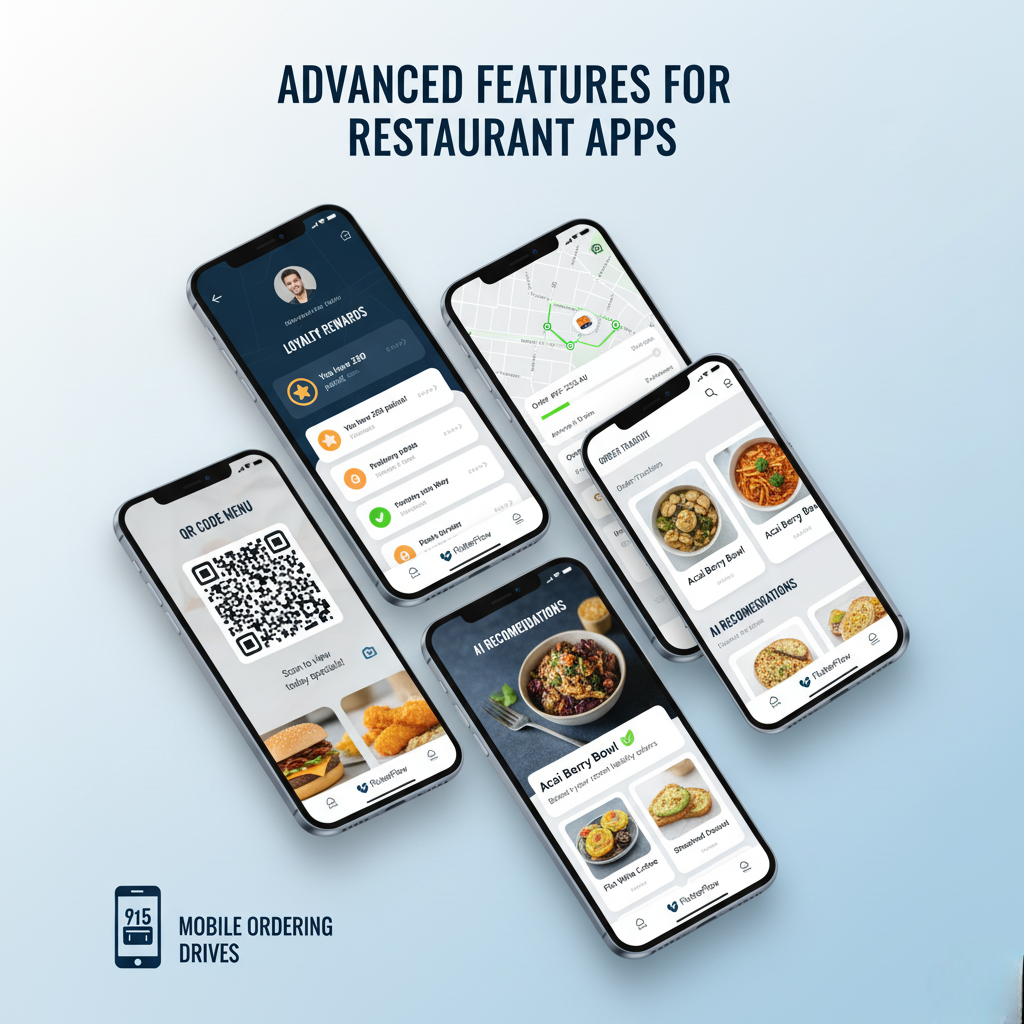
7.1 Loyalty Programs
Australian customers respond well to reward-based incentives. Integrating a loyalty program in your app can encourage repeat orders and strengthen your brand:
- Points per order: Customers earn points that can be redeemed for discounts or free items.
- Tiered rewards: Create Silver, Gold, and Platinum levels for frequent customers.
- Special promotions: Offer birthday discounts, early access to new menu items, or seasonal deals.
Example: A Melbourne café could reward a free coffee after ten visits, fostering repeat business and customer loyalty.
7.2 AI-Based Meal Recommendations
Leverage AI-driven personalization to enhance user experience:
- Suggest meals based on past orders, preferences, or popular dishes.
- Recommend combo deals, add-ons, or seasonal specials.
- Use AI to optimize delivery routing and estimated preparation times, improving operational efficiency.
Personalized recommendations make the app feel smarter and more tailored to individual users, increasing engagement and order value.
7.3 Real-Time Delivery Tracking
Transparency is key for Australian consumers. Features to include:
- Live GPS tracking: Show the delivery partner’s location and ETA.
- Status updates: Notify customers when their order is accepted, prepared, and out for delivery.
- Estimated delivery time adjustments: Dynamically update ETAs based on traffic or preparation delays.
This not only improves customer satisfaction but also reduces support inquiries.
7.4 Table Reservations (for cafés & restaurants)
For sit-down dining, integrating table booking capabilities adds convenience:
- Allow users to reserve tables directly through the app.
- Include options for time slots, number of guests, and special requests.
- Combine reservations with menu previews or loyalty rewards to enhance the overall experience.
This feature is particularly valuable for high-traffic areas like Sydney CBD, Melbourne, and Brisbane, where reservations help manage flow efficiently.
7.5 Contactless Dining & QR Menus
Health-conscious Australians value hygiene and convenience:
- QR-code menus reduce physical touchpoints and allow customers to browse the menu on their phones.
- Enable contactless ordering and payment for dine-in customers.
- Integrate loyalty and promotions directly through QR interactions.
Cafés, bars, and casual restaurants can benefit significantly by combining QR menus with digital payments and table ordering, making the dining experience modern and safe.
7.6 Localised Add-ons
- Highlight seasonal or regional specialties to appeal to local tastes.
- Offer flexible delivery options, including metro, suburban, and regional areas.
- Include promotional banners for events like AFL games, local festivals, or holiday seasons.
By integrating these advanced, Australian-focused features, restaurants can compete effectively with large aggregators while providing a superior, personalized experience for their customers.
8. Testing, Launch & Marketing in Australia
The next step after launching a restaurant and delivery app in Australia is to test, launch, and use marketing techniques that appeal to Australian users. While this may be a challenge, by optimizing performance, improving visibility within the App Store, and promoting your app through targeted advertisements, you will be able to generate interest in your app rapidly across both metropolitan and regional areas.
8.1 Test Your App Across Various Australian Network Types
The geography of Australia poses many unique problems, such as large urban areas (e.g., Sydney, Melbourne), regional towns, and rural areas. To guarantee good performance in all of these environments:
• You need to test your FlutterFlow food delivery app in Australia on various devices and network speeds (e.g., 4G, 5G, and slow rural networks).
• The size of images used, whether they should be cached, and how to handle when there is no connection to the internet all affect the time it takes for your app to load and should therefore be optimized for the best possible experience.
• Simulation of heavy usage during busy times of day will allow you to test your app under stress, to determine if it will crash or become unresponsive when many people are using it at once.
A good-performing app will result in a higher level of satisfaction for your customers and lower rates of abandoned orders, which is very important since you are competing against other apps in this space.
8.2 Test Your App in Rural and Suburban Areas
Regional Australians have several issues related to delivery and connectivity. When you test your no-code food delivery app for Australian restaurants in these environments, you can:
• Evaluate the functionality of your app when the user is not connected to the internet, including menu caching and queuing orders for later synchronization.
• Average delivery estimate based on distance and travel time between locations in suburban and rural areas.
• Evaluate the reliability of notifications and alerts in areas where internet access is unreliable due to poor connectivity.
If you resolve these issues, your app can potentially extend into areas outside of metropolitan regions and increase total market penetration.
8.3 Improve Visibility Through App Store Optimization (ASO)
Having an app that is visible in app stores is also critical to getting new customers. The following are some examples of ways to improve visibility in app stores that relate to the Australian environment:
• App name and description that reference your locale (e.g., "Takeaway App for Sydney" or "Food Delivery App for Melbourne").
• Use keywords from the Australian English dictionary (e.g., "takeaway," "delivery," "cafe," and local foods).
• High-quality screenshots and/or video showcasing your menu items, the flow of ordering and delivering food.
• A small number of positive reviews and high rating -- Encourage your first set of customers to write feedback about your app so you can build credibility.
Good ASO will put your FlutterFlow food delivery app in Australia directly in front of the eyes of potential customers who are looking for a local delivery solution.
8.4 Targeted Advertising and Social Media
Effective digital marketing is required to reach potential customers in Australia:
• Social Media Campaigns -- Targeted advertising campaigns on Facebook, Instagram, and TikTok targeting specific cities or geographic areas.
• Local Google Ads -- Use Google Ads that are targeted to a local area and contain keywords that reference your local area (e.g., "Brisbane takeaway delivery", "Perth vegan cafe delivery")
• Email Campaigns -- Promote the launch of your app, your loyalty program, seasonal specials, etc.
• Partnering with Local Influencers -- Partner with influencers in your community to build credibility and to reach a wider audience.
8.5 Establish Regional Keywords
To make your app easier to find through search engines, tailor your app content to include words related to your locale:
• "MELBOURNE FOOD DELIVERY"
• "SYDNEY TAKEAWAY APP"
• "BRISBANE CAFE DELIVERY"
• "PERTH RESTAURANT DELIVERY SERVICE"
These keywords will allow your restaurant app features for Australian startups to attract users searching for food delivery services in their city and increase the number of downloads and orders generated by your app.
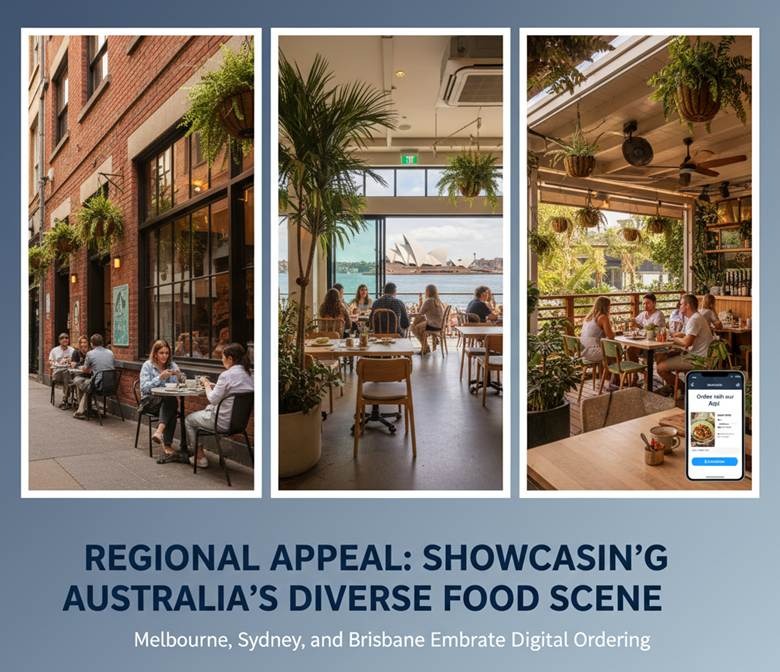
Through the combination of extensive testing, effective app store optimization, and localized marketing efforts, Australian restaurants and startup businesses can successfully build a restaurant and delivery app in Australia, ensure optimal performance, and achieve successful acquisition of customers. This strategy will enable businesses to maximize customer engagement, establish and enhance brand presence, and create the foundation for future growth and success.
9. Regulatory & Operational Considerations in Australia
Creating a restaurant and food delivery application in Australia is much more than simply creating a great user experience and using a platform of technology. It is also about adhering to local and national standards that govern the operation of a food service establishment and ensuring that the application complies with the law so as to avoid being fined or losing reputation and credibility with your customers.
Compliance with local regulations will allow your food service business to run smoothly, avoid any potential disputes with government agencies, such as state and/or federal authorities, and establish and maintain trust with your customers when you build a restaurant and delivery app in Australia.
9.1 GST (Goods and Services Tax) Compliance
GST is currently 10% on most products and services sold in Australia. The GST includes the following:
• Your FlutterFlow food delivery app in Australia will need to calculate the GST from each sale made by your restaurant.
• The GST needs to be clearly displayed on all receipts and invoices issued to customers, and provide customers with a detailed breakdown of what they were charged.
• The ATO provides reporting tools to assist you with submitting your GST returns.
Using proper tax integration while you build a restaurant and delivery app in Australia will ensure you comply with tax regulations and assist with your bookkeeping and accounting for your restaurant.
9.2 ABN (Australian Business Number)
If you wish to operate your restaurant business in Australia, you will need to register your business for an ABN before launching your application.
You will need to include the ABN on all invoices, receipts, and confirmations of sales generated from the use of your no-code food delivery app for Australian restaurants, in addition to displaying it on other documents and materials used for the purpose of promoting your restaurant business.
The inclusion of an ABN number on your invoices and receipts will assist in establishing credibility and legitimacy for your restaurant business, especially if your application generates revenue through delivery or in-house transactions.
9.3 Food Safety & Health Regulations
Food safety and health regulations in Australia are strictly regulated by the FSANZ, and failure to comply with these regulations could result in serious penalties and fines, as well as damage to the public image of your restaurant business.
Some of the specific requirements you must comply with include:
• Menus need to identify allergens and provide nutritional information where applicable.
• Temperature controls, packaging, and hygiene practices need to be followed when preparing food for delivery.
• Food safety training should be provided to employees and their attendance tracked via your application’s administrative area.
Complying with food safety and health regulations is essential for maintaining the integrity of your FlutterFlow food delivery app in Australia and building trust with your customers.
9.4 Delivery Licensing & Insurance
If you are planning to operate a delivery service through your application, there may be additional licenses and insurances that you will need to obtain, depending upon your business model.
Some of the types of insurance and licenses you may need to consider obtaining include:
• Driver/courier license — make sure that your delivery contractors have the necessary licenses and certifications to operate a vehicle and deliver food.
• Public liability insurance — this will help protect your restaurant and its customers in the event of an accident or injury.
• Vehicle/fleet insurance — this type of insurance will protect either your own delivery vehicles or those that are hired or contracted to deliver your restaurant’s food products.
Having the correct insurance and licenses in place will not only protect your business from any potential losses but will also build credibility with your customers and promote customer confidence in your no-code food delivery app for Australian restaurants.
9.5 Payment Compliance
Payment regulations for businesses operating in Australia are governed by ASIC and financial institutions, and include the requirement for secure payment gateways and the protection of cardholder data.
Specifically, you should integrate into your restaurant app features for Australian startups the following secure payment gateways:
• PayPal
• Stripe
• Afterpay
In addition to integrating a secure payment gateway into your application, you will also need to follow PCI DSS guidelines to protect cardholder data and to clearly communicate your refund, cancellation, and dispute policies within your application.
Using secure and compliant payment processing systems will help build trust and increase repeat business from your customers who use your FlutterFlow food delivery app in Australia.
9.6 Local Operational Best Practices
When developing and implementing an application for your Australian restaurant business, you will also want to consider some local operational best practices.
Some of the local operational considerations to keep in mind include:
• Regional delivery considerations — define clear boundaries around your delivery zones, pricing structures, and estimated time of arrival for deliveries to different geographic areas (urban, suburban, etc.)
• Customer support — develop in-app chat functionality, FAQs, and support ticketing systems to allow customers to easily contact your business for assistance with issues or concerns.
• Marketing compliance — when designing and executing marketing campaigns, including promotional offers and loyalty programs, ensure that you are complying with relevant Australian laws, including those related to data privacy and the Australian Privacy Act 1988.
Adhering to the local and national standards governing the operation of a food service establishment, as outlined above, will ensure that your no-code food delivery app for Australian restaurants operates successfully and efficiently while providing a positive experience for both your employees and customers.
10. Conclusion & Next Steps
The 2025 Australian restaurant and food delivery market is brimming with opportunities for restaurants and startups willing to take on the challenges of digital transformation. The current landscape is dominated by aggregators such as Uber Eats and Menulog, but restaurants now have an opportunity to build a restaurant and delivery app in Australia that gives them full control over their brand, direct customer interaction, and advanced functionality — at a lower overall cost than third-party providers.
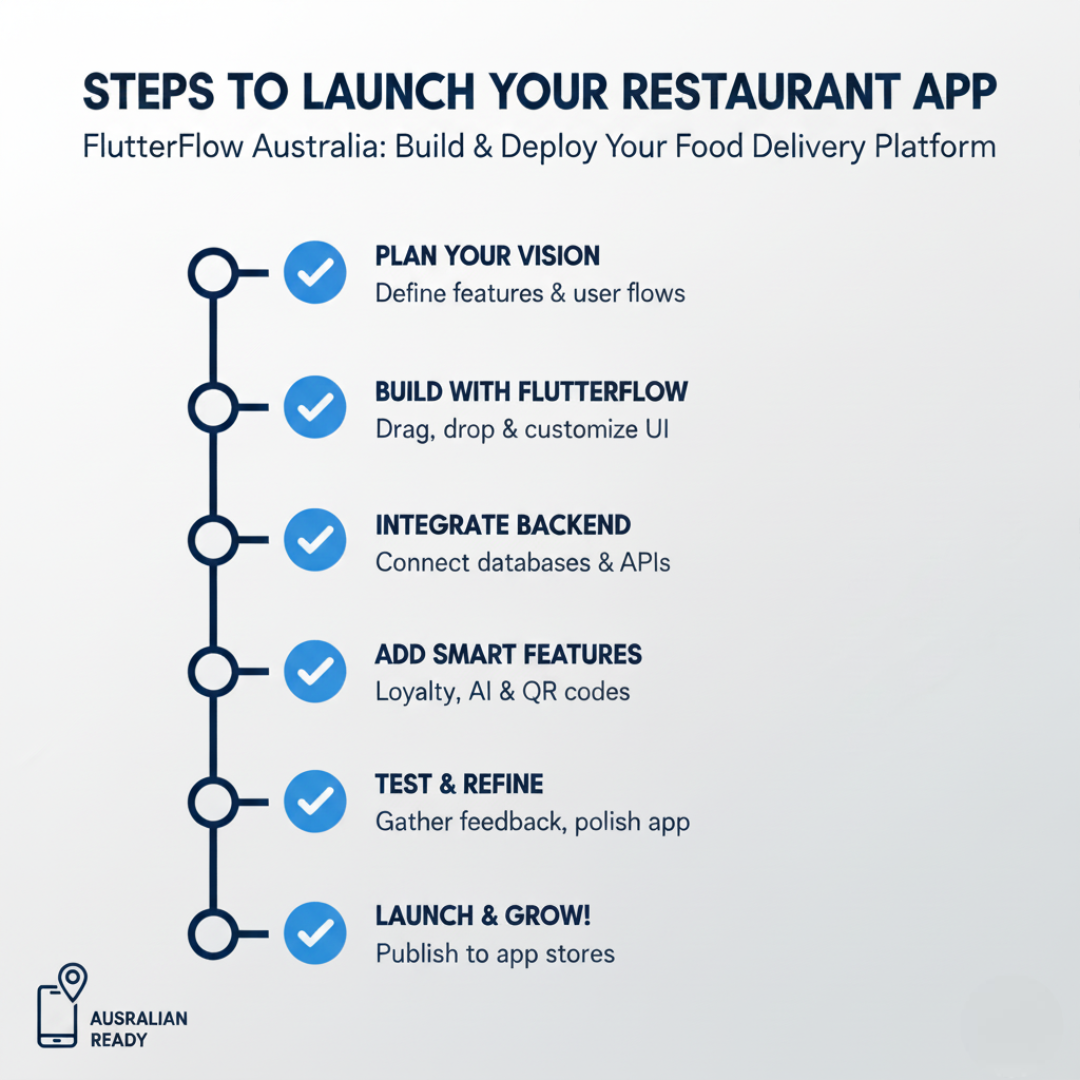
Follow these six steps for creating a successful FlutterFlow food delivery app in Australia:
Plan your app's architecture; structure your menu options and ordering system; create an intuitive user interface and user experience (UI/UX) designed specifically for Australian users; design and develop your restaurant dashboard; integrate advanced features including loyalty programs, Artificial Intelligence (AI)–based product recommendation systems, delivery tracking, table reservations, and contactless dining experiences; and ensure compliance with all relevant Australian regulations and guidelines. Once completed, your app will provide your customers with a seamless, enjoyable, and profitable experience.
At FlutterflowDevs, we specialize in assisting Australian restaurants and startups in transforming their app ideas into reality. We have extensive experience in FlutterFlow, Firebase, Supabase, and no-code development, helping our clients through every step of the process to build a restaurant and delivery app in Australia that meets both technical and business needs.
We assist our clients with:
• Creating a visual and functional app design and developing the app
• Setting up and configuring a fully functional dashboard and analytical reporting system
• Integrating restaurant app features for Australian startups, such as AI-powered recommendations and loyalty programs
• Testing and launching your app in the App Store and Google Play
• Providing local marketing strategies specific to the Australian market
Whether you're a small café in Melbourne, a busy restaurant in Sydney, or a growing chain of restaurants expanding across regional Australia, FlutterflowDevs has the expertise to help you create a no-code food delivery app for Australian restaurants that is scalable, secure, and performance-driven. Our FlutterFlow food delivery app in Australia solutions help you exceed customer expectations and gain a strong competitive edge in the marketplace.
Steps to Take to Complete Your Restaurant App
Step 1: Define your app's goals and features – Focus on what will excite your customers.
Step 2: Plan your architecture and data structure – Make sure it’s scalable and reliable.
Step 3: Design your app for your Australian target audience – Keep navigation intuitive, visuals appealing, and content localized.
Step 4: Add advanced restaurant app features for Australian startups – Loyalty Programs, AI-Based Recommendations, Delivery Tracking, QR Menus, Table Reservations, and more.
Step 5: Test and Launch Your App – Optimize for Australian networks, app store listings, and local marketing campaigns.


View more blogs


.png)
.jpg)
.png)
.png)


.png)

Ready to develop your own product? Get in touch today!
Get in Touch
