

.png)



1. Introduction
Running a fitness business becomes very different once the number of clients starts growing.
Managing workout plans, tracking progress, answering questions, and keeping members engaged can be handled manually in the beginning. But as more users join, those same tasks often become harder to manage efficiently.
This is one reason many fitness businesses are exploring a fitness clone app rather than relying entirely on traditional coaching methods. A digital platform allows users to access workouts, monitor progress, and stay connected without depending on fixed schedules or in-person sessions.
The expectations, however, are much higher than they were a few years ago.
Users don't simply want workout content. They expect progress tracking, trainer access, exercise guidance, workout history, and a seamless mobile experience. Delivering all of those capabilities requires more than a basic application.
For founders, that usually means evaluating different approaches before development begins. Some choose a custom build, while others start with a freeletics app template that already includes many of the core systems required by modern fitness platforms.
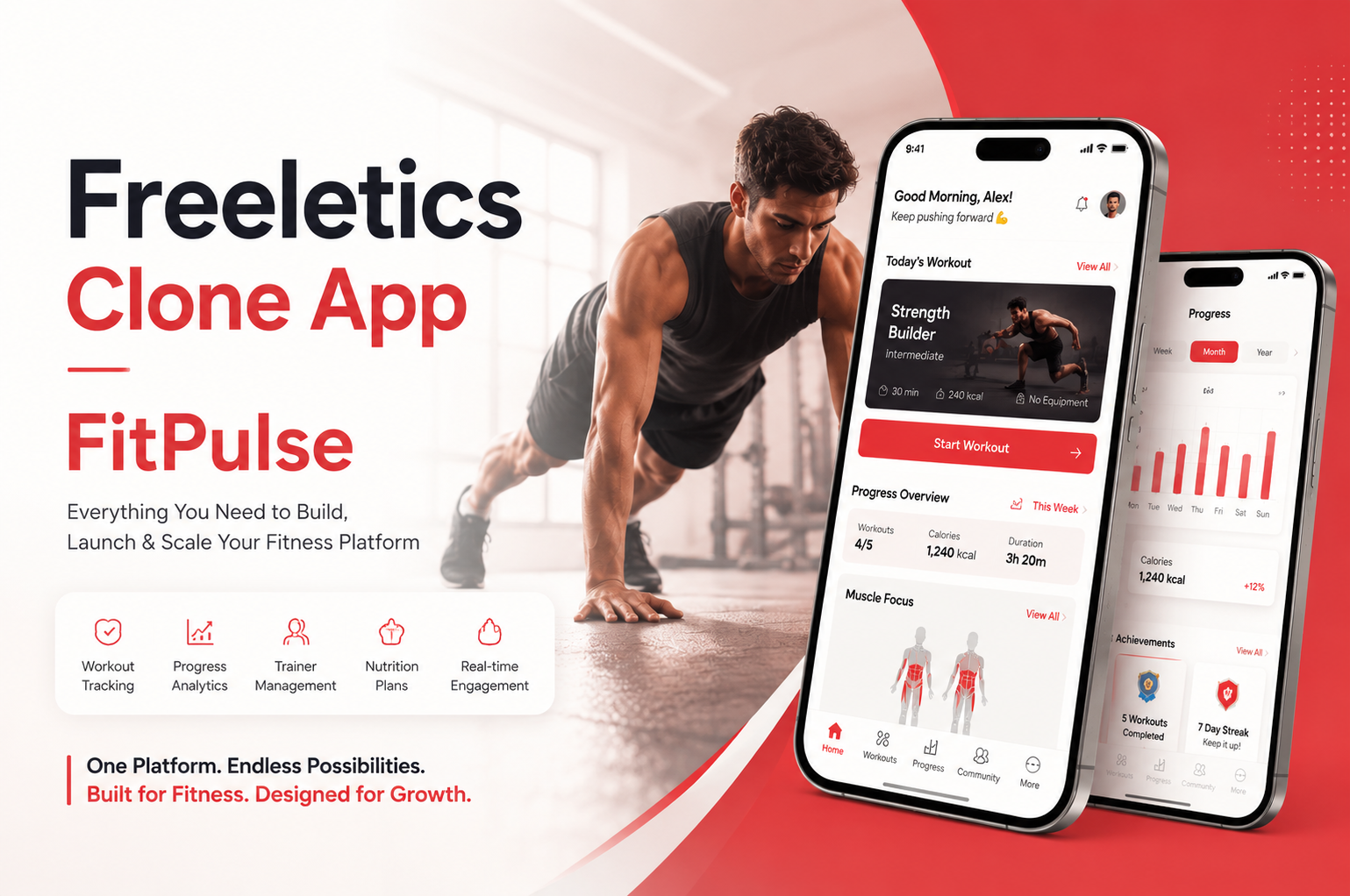
FitPulse was created around that idea.
As a complete workout tracker template, it combines user experiences, trainer functionality, and administrative controls inside a single platform. For businesses considering a fitness coach app clone, this approach can significantly reduce the time spent building common fitness infrastructure.
Today, startups, fitness brands, personal trainers, and gyms are all looking for faster ways to launch digital fitness products. Whether the goal is a scalable fitness clone app or a production-ready fitness coach app clone, choosing the right workout tracker template and a proven freeletics app template can create a much smoother path to launch.
2. What Users Expect From a Modern Fitness Platform Today
Not long ago, fitness apps had a fairly simple job.
Provide workouts, maybe include a few exercise videos, and give users a place to follow a training plan.
That was often enough.
Today, the situation is very different.
Users compare fitness platforms with the best apps they use every day. If something feels difficult to navigate, lacks useful information, or doesn't help them stay consistent, they quickly lose interest. That's one reason businesses planning a fitness clone app need to think beyond workout content alone.
The workout itself is rarely the reason someone stays.
Progress is.
After completing a session, most users want to know whether they're moving closer to their goals. They check previous workouts, compare performance, and look for evidence that their effort is paying off. This is exactly where a strong workout tracker template becomes important.
Without visible progress, motivation often fades.
With visible progress, users have a reason to keep going.
Another expectation is personalization.
People join fitness platforms for different reasons. Some want to lose weight. Others want to build strength, improve endurance, or simply stay active. A modern fitness coach app clone needs to support those different journeys instead of offering the exact same experience to everyone.
Exercise guidance has become equally important.
Most users don't know every movement, exercise variation, or training technique. When instructions are difficult to find, the overall experience suffers. That's one reason exercise demonstrations have become a common feature inside a professional freeletics app template. Users expect answers to be available without leaving the platform.
Convenience also plays a major role.
Workout reminders, training calendars, progress history, and quick access to programs may seem like small features, but they often have a significant impact on engagement. These details help users stay consistent when routines become difficult to maintain.
This is why building a successful fitness clone app is about much more than providing workouts.
Users expect a connected experience where progress tracking, trainer interaction, exercise guidance, and personalization work together. Businesses evaluating a freeletics app template often recognize this early because these expectations have already become standard across the fitness industry.
The same principle applies to retention.
A well-designed workout tracker template helps users see progress. A structured fitness coach app clone helps users stay engaged. Together, they create the kind of experience modern fitness users expect.
And that is often the difference between a platform people try once and a platform they continue using for months.
3. Why Fitness Businesses Need More Than Just Workout Plans
Many founders assume building a fitness platform is mainly about workouts.
At first, that sounds reasonable.
Users sign up, choose a training plan, complete workouts, and track results.
Simple.
But once real users start interacting with the platform, things become more complicated.
People want to review previous workouts.
They want reminders.
They want progress updates.
They want trainer guidance.
They want exercise demonstrations.
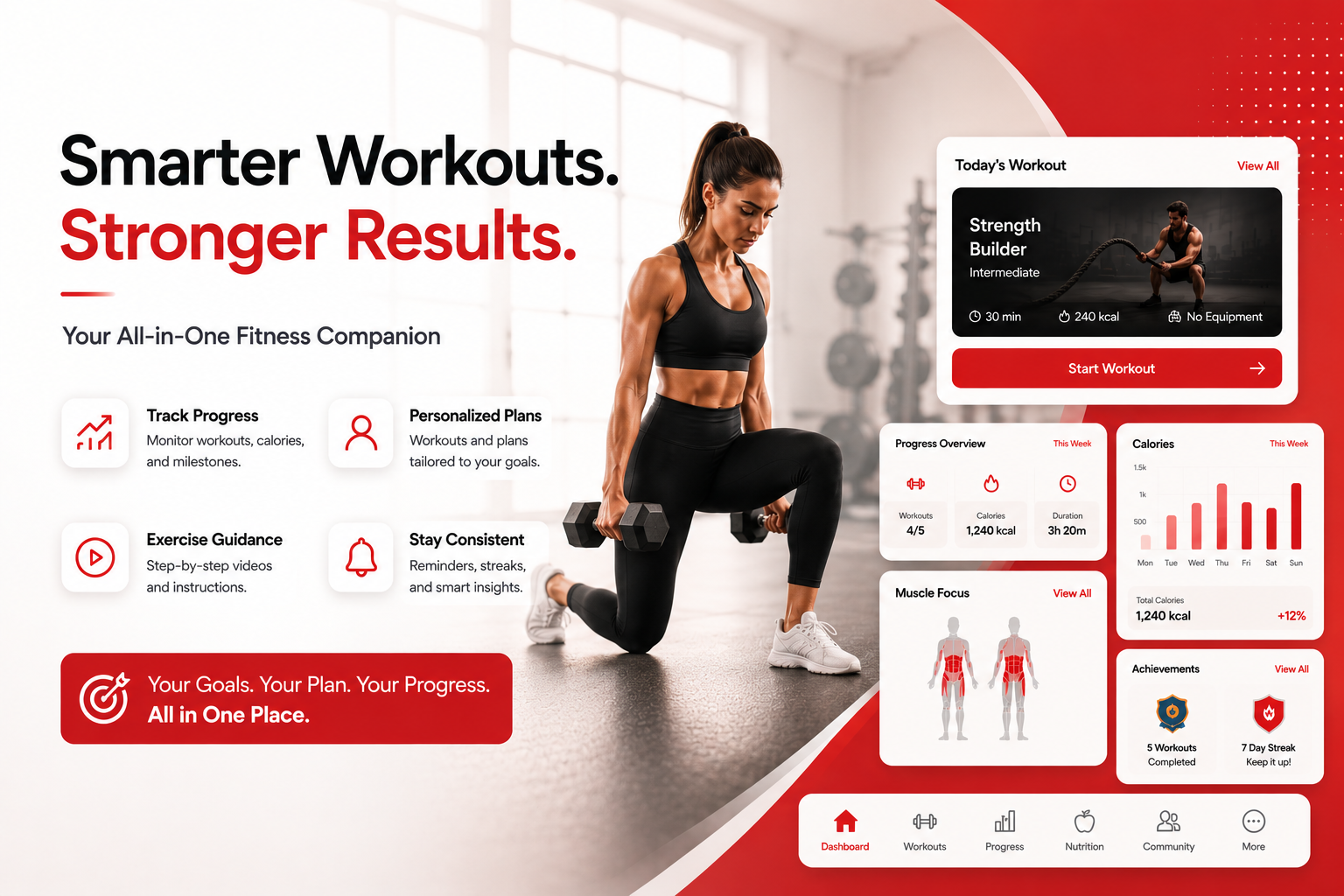
Very quickly, the platform becomes much more than a collection of workout plans.
That is exactly why businesses building a fitness clone app often discover that user engagement depends on far more than workout content alone.
3.1 The Real Challenge Starts After Users Sign Up
Getting downloads is one challenge.
Keeping users active is another.
Many fitness platforms attract users during the first few weeks but struggle to keep them engaged long term. The reason is usually not the workouts themselves.
The problem is that users stop seeing progress.
When someone cannot easily track improvements, motivation starts fading. This is where a strong workout tracker template becomes valuable.
Workout history, training logs, measurements, and progress tracking give users a reason to return. Instead of guessing whether they are improving, they can see the results directly inside the platform.
That visibility often becomes one of the biggest retention drivers inside a modern fitness coach app clone.
3.2 Why Progress Tracking Changes User Behavior
People rarely stay committed to fitness because of motivation alone.
Most continue because they can see progress.
A small increase in weight lifted.
A longer workout streak.
A visible change in body measurements.
These milestones create momentum.
That is one reason progress tracking has become a standard expectation inside a professional freeletics app template. Users want evidence that their effort is producing results.
Without that feedback loop, even well-designed workout programs can struggle to keep people engaged.
This is also why businesses evaluating a fitness clone app often focus heavily on tracking capabilities before anything else.
3.3 Trainers Play a Bigger Role Than Many Founders Expect
Not every user wants to train alone.
Many people feel more confident when workouts come from a qualified trainer rather than an anonymous program.
Trainer profiles, certifications, specializations, and structured coaching plans help create that confidence. For businesses launching a fitness coach app clone, these elements can influence retention just as much as the workout content itself.
The same applies to trainer management.
As platforms grow, trainers need tools for creating programs, managing exercises, and monitoring user engagement. A complete workout tracker template supports both sides of the experience rather than focusing only on members.
That is one reason modern fitness platforms continue moving beyond basic workout applications.
Users expect progress tracking.
Trainers expect management tools.
Businesses expect operational visibility.
A well-structured freeletics app template brings those systems together inside a single platform. And for founders planning a scalable fitness clone app, that connected experience often becomes a significant advantage from the very beginning.
4. Why Users Stop Using Fitness Apps — And How Tracking Solves It
Many fitness apps lose users surprisingly fast.
Not because the workouts are bad.
Not because the trainers are unqualified.
And usually not because the design is poor.
The problem often appears after the first few weeks.
A user joins.
Completes a few workouts.
Feels motivated.
Then gradually opens the app less and less.
Eventually, the habit disappears.
This is something many founders discover while building a fitness clone app.
The challenge is rarely getting users started.
The challenge is giving them a reason to come back.
4.1 Users Need To See Progress
Fitness results rarely happen overnight.
Most improvements are gradual.
A little more weight lifted.
A few extra repetitions.
A small improvement in consistency.
Without records, many of these wins go unnoticed.
That is where a workout tracker template becomes important.
When users can look back at previous workouts, progress becomes easier to recognize. Instead of wondering whether anything is changing, they have a clear history showing exactly what has improved.
4.2 Workout History Creates Accountability
People often underestimate how powerful workout history can be.
Missing one workout feels insignificant.
Missing ten workouts feels very different when the gap is visible.
Many successful fitness products use workout history as a way to reinforce consistency rather than simply record activity.
For businesses building a fitness coach app clone, this becomes a valuable engagement tool.
Users are not just logging data.
They are building a record of effort.
4.3 Why Tracking Became a Standard Feature
A few years ago, workout tracking was often treated as an extra feature.
Today, users expect it.
Most people assume they will be able to review sessions, monitor progress, and compare performance over time. That expectation is one reason nearly every modern freeletics app template includes tracking functionality as part of the core experience.
Without it, the platform feels incomplete.
The same applies to founders evaluating a fitness clone app.
Progress visibility is no longer a competitive advantage.
It is a basic expectation.
4.4 Retention Often Starts With Tracking
Many businesses spend time looking for advanced retention strategies.
Referral programs.
Rewards.
Challenges.
Community features.
All of those can help.
But often, the simplest retention mechanism is progress itself.
When users can clearly see improvement, they are more likely to continue training.
That is exactly why a strong workout tracker template remains one of the most valuable parts of a modern fitness platform.
A professional fitness coach app clone helps users stay consistent.
A complete freeletics app template helps businesses deliver that experience at scale.
And for many founders, that combination becomes one of the strongest reasons to invest in a modern fitness clone app in the first place.
5. Core Features Included Inside FitPulse
One of the biggest reasons fitness platforms become difficult to build is the number of systems required to support users, trainers, and business operations.
What looks like a simple fitness app on the surface usually includes multiple connected experiences working together behind the scenes.
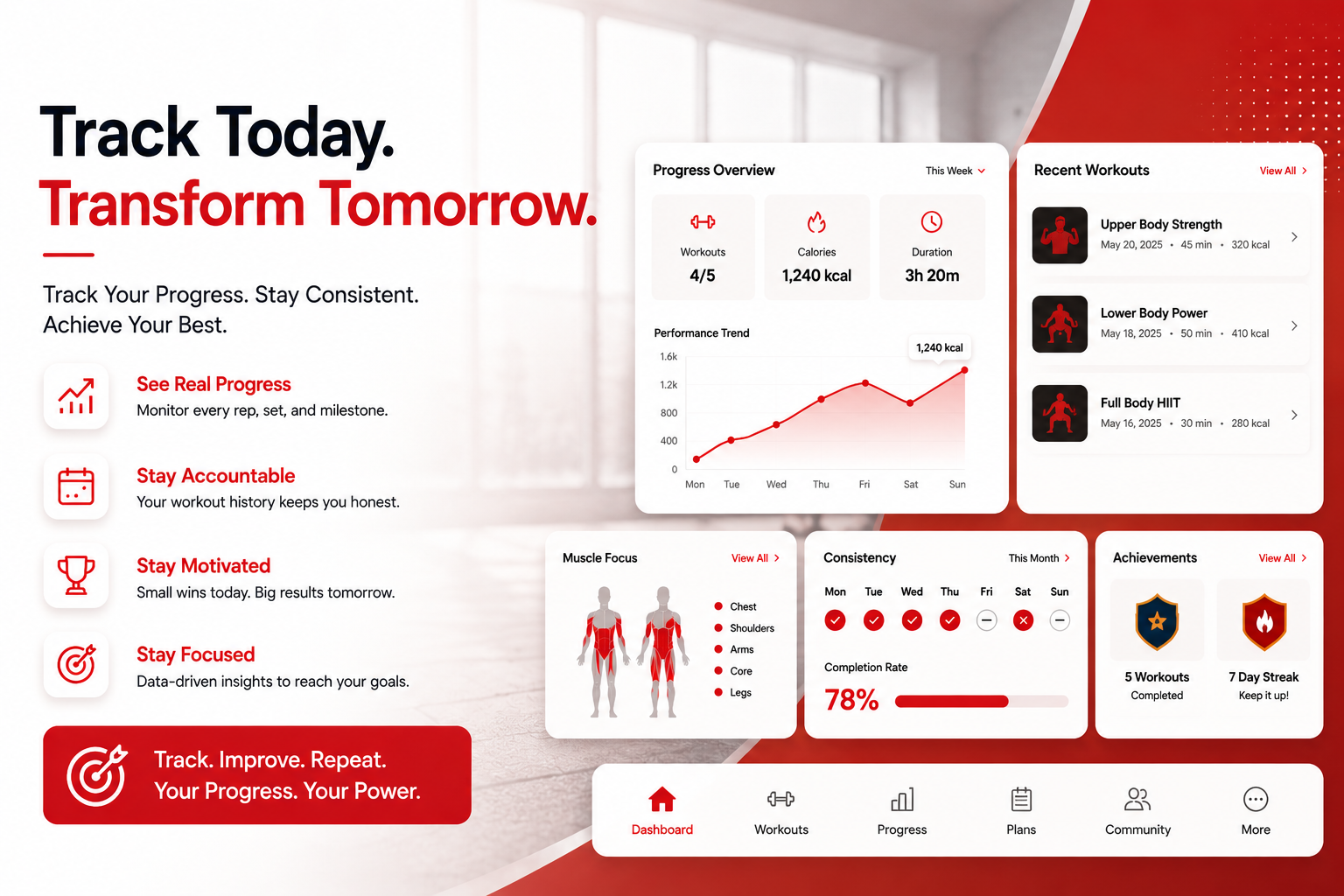
FitPulse brings those experiences together inside a single platform.
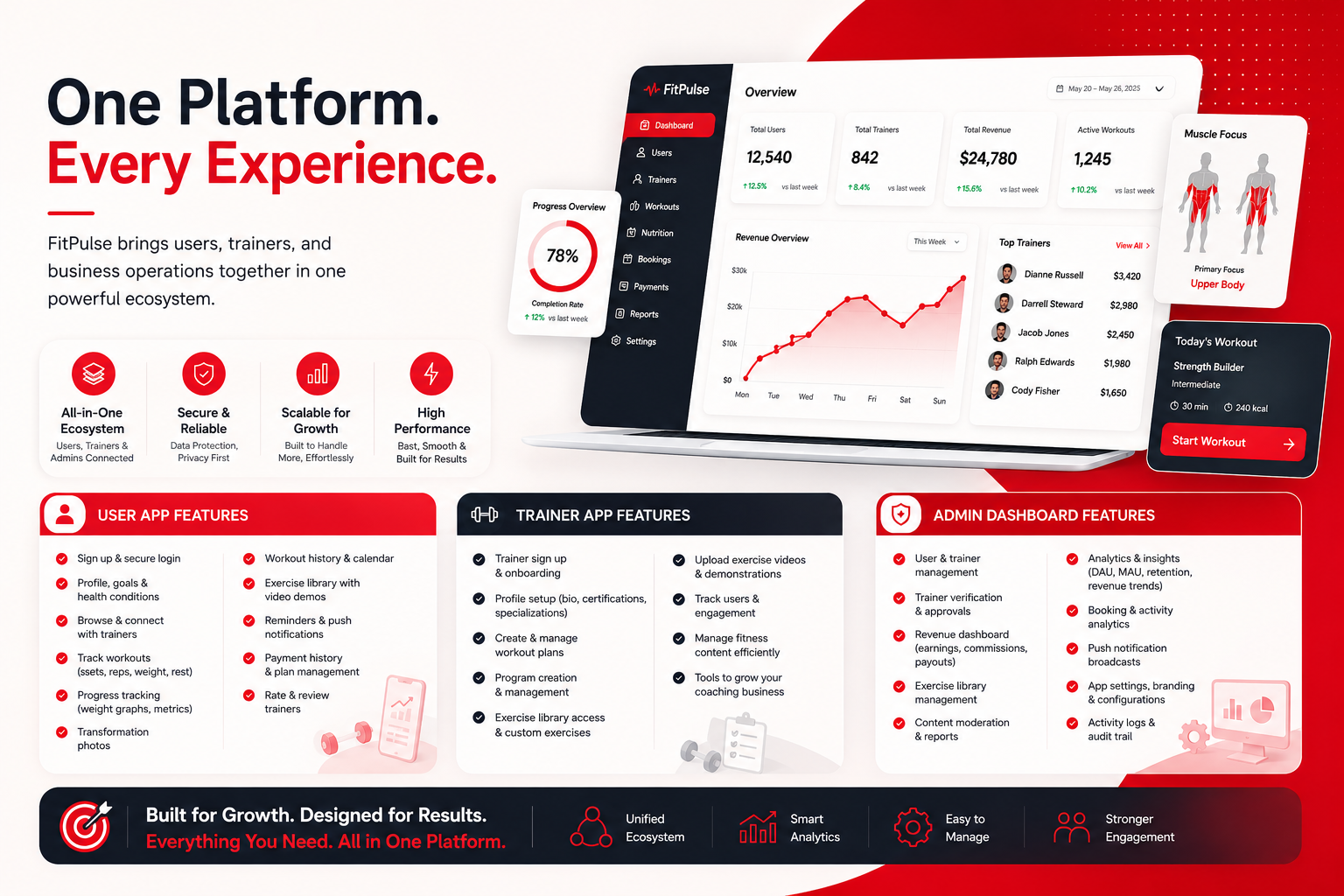
5.1 User App Features
The user application is designed to help members train consistently, monitor progress, and stay engaged.
Key User Features Include:
- Sign up with phone, email, or social login
- Profile creation with photos, body metrics, fitness goals, and health conditions
- Browse trainer profiles, certifications, ratings, and specializations
- Track workouts with sets, reps, weight, duration, and rest timers
- Progress tracking through weight graphs and body measurements
- Before-and-after transformation photos
- Workout history
- Workout calendar and schedule tracking
- Exercise library with video demonstrations
- Session reminders and push notifications
- Payment history and plan management
- Rate and review trainers
These capabilities help create the experience users expect from a modern workout tracker template while improving engagement inside a scalable fitness clone app.
5.2 Trainer App Features
A fitness platform is only as strong as the trainers supporting it.
FitPulse provides dedicated tools that help trainers manage programs, content, and member engagement.
Key Trainer Features Include:
- Trainer sign up and onboarding
- Profile setup with bio, certifications, photos, and specializations
- Workout plan creation
- Program creation and management
- Exercise library access
- Custom exercise creation
- Upload exercise videos and demonstrations
- Track users and engagement
- Manage fitness content efficiently
These tools make FitPulse a practical foundation for businesses planning a professional fitness coach app clone.
5.3 Admin Dashboard Features
As user activity grows, businesses need visibility and operational control.
The admin dashboard helps platform owners manage the entire ecosystem from a central location.
Key Admin Features Include:
- User management
- View, edit, suspend, and delete members or trainers
- Trainer verification
- Approve or reject trainer applications
- Verify certifications
- Revenue dashboard
- Monitor earnings
- Track commissions
- Manage payouts
- Exercise library management
- Add exercises
- Edit exercise content
- Delete exercises and videos
- Content moderation
- Review reported users
- Handle inappropriate content
- Push notification broadcasts
- Analytics dashboard
- Daily Active Users (DAU)
- Monthly Active Users (MAU)
- Retention metrics
- Booking analytics
- Revenue trends
- App settings and configuration
- Branding management
- Terms and conditions
- Privacy policy controls
- Activity logs and audit trail
These operational capabilities are commonly expected inside a production-ready freeletics app template and help businesses manage growth more effectively.
Together, the user application, trainer application, and administrative dashboard create a complete ecosystem. For founders evaluating a fitness clone app, a scalable workout tracker template, a modern fitness coach app clone, or a feature-rich freeletics app template, having these systems already connected can significantly reduce development effort before launch.
6. The Real Cost of Building a Freeletics-Style Fitness Platform
Most founders think building a fitness platform is mainly about workout screens and exercise content.
It isn't.
The real complexity starts when all systems need to work together.
Users need profiles.
Trainers need management tools.
Workouts need tracking.
Progress needs monitoring.
Notifications need to arrive at the right time.
Payments need to be managed.
Analytics need to track platform activity.
That is why building a modern fitness clone app often becomes a much larger project than expected.
6.1 The User Experience Requires Multiple Systems
At first, user features seem straightforward.
But a modern fitness platform usually requires:
- User authentication
- Fitness profiles
- Goal management
- Workout tracking
- Progress monitoring
- Workout history
- Exercise libraries
- Trainer discovery
- Payment management
- Push notifications
Each feature may look simple on its own.
The challenge appears when all of them need to work together inside a single experience.
That is one reason many founders start evaluating a workout tracker template before committing to full custom development.
6.2 Trainer Functionality Adds Another Layer
Most fitness platforms are not built only for users.
They are also built for trainers.
A professional trainer experience often includes:
- Profile management
- Certification management
- Workout plan creation
- Program creation
- Exercise uploads
- User monitoring
- Engagement tracking
At this stage, the platform is no longer a simple workout application.
It has become a complete coaching ecosystem.
That is why a serious fitness coach app clone typically requires significantly more development effort than founders initially anticipate.
6.3 Administrative Tools Are Often Overlooked
Many founders focus on the user-facing experience.
The operational side usually receives attention later.
However, growing platforms eventually need:
- User management
- Trainer approvals
- Revenue monitoring
- Analytics
- Content moderation
- Notification management
- Platform configuration
Without these systems, managing growth becomes increasingly difficult.
This is one reason businesses exploring a freeletics app template often look beyond user features and evaluate the operational infrastructure as well.
6.4 Why Many Businesses Start With a Ready-Made Foundation
Building every system independently is possible.
Many companies do it.
The question is whether rebuilding standard functionality creates value for the business.
A production-ready freeletics app template already includes much of the infrastructure required by modern fitness platforms. Instead of spending months rebuilding common systems, businesses can focus more on customization, branding, marketing, and growth.
For founders evaluating a fitness clone app, launch speed often becomes an important factor.
A complete workout tracker template can reduce development effort considerably.
A structured fitness coach app clone can help teams avoid rebuilding trainer workflows from scratch.
And a proven freeletics app template provides a practical foundation for businesses that want to launch faster while maintaining the functionality users already expect from a modern fitness clone app.
7. Why Launch Speed Has Become a Competitive Advantage in Fitness
Most fitness startups begin with the same goal.
Launch a platform. Attract users. Grow the business.
Simple in theory.
Then the planning starts.
Users need onboarding.
Workouts need tracking.
Progress needs monitoring.
Trainers need management tools.
Exercise content needs organization.
Notifications need to work properly.
Administrators need visibility into everything happening across the platform.
Very quickly, what looked like a fitness app starts looking like a complete ecosystem.
That is exactly why many founders exploring a fitness clone app eventually rethink how they approach development.
7.1 Building Features Is Easy. Building an Ecosystem Is Not
Most fitness platforms contain similar components.
User profiles.
Workout plans.
Progress tracking.
Trainer interactions.
Analytics.
The difficult part is not building those features individually.
The difficult part is making them work together.
Inside a modern fitness coach app clone, every action affects another system.
A completed workout updates progress records.
Progress influences engagement.
Trainer-created programs affect user retention.
Notifications bring users back into the platform.
Nothing operates independently.
That interconnected structure is often where development timelines expand far beyond initial expectations.
7.2 Why Founders Are Looking for Faster Paths to Market
The fitness industry moves quickly.
New programs appear constantly.
Training trends change.
User expectations continue evolving.
Spending months rebuilding functionality that already exists is not always the best use of resources.
That reality has increased interest in ready-made solutions.
Many startups now begin with a freeletics app template because it allows them to focus on growth rather than infrastructure. Instead of allocating most of the timeline to development, teams can spend more time building communities, attracting users, refining branding, and improving customer experiences.
For businesses evaluating a workout tracker template, that shift can make a significant difference during the early stages.
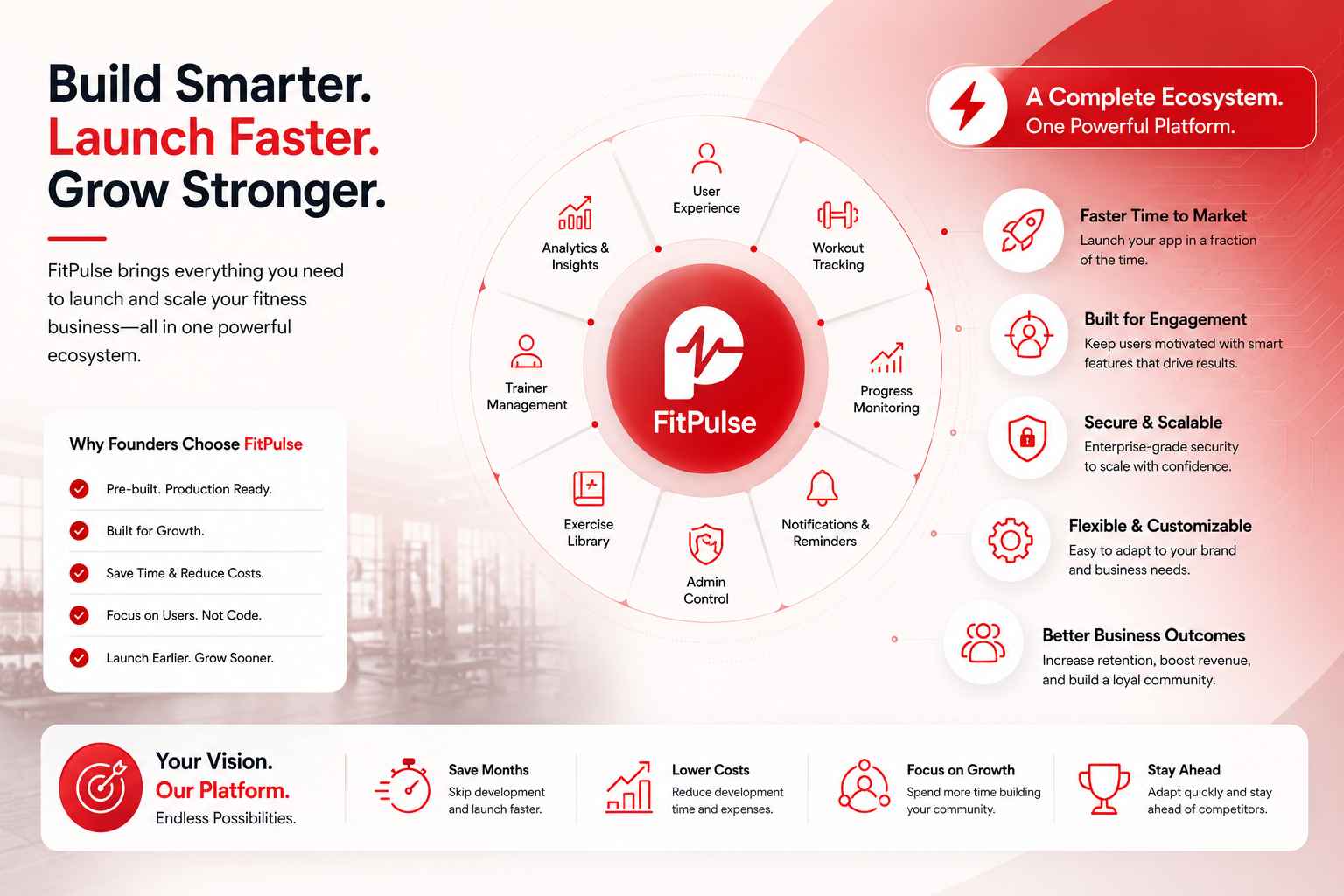
7.3 FitPulse Brings the Core Systems Together
FitPulse was designed around a simple idea.
Founders should spend less time rebuilding common fitness infrastructure and more time growing their business.
The platform already combines the systems modern fitness products depend on:
- User onboarding and profiles
- Workout tracking and progress monitoring
- Trainer management
- Exercise libraries
- Notifications and reminders
- Analytics and operational controls
For businesses planning a fitness clone app, having these systems connected from the beginning removes a large amount of complexity before launch.
The same applies to founders looking for a scalable fitness coach app clone that can support users, trainers, and administrators within a single platform.
7.4 Launch Earlier. Learn Faster. Grow Sooner
Most successful fitness businesses do not become successful because every feature was perfect on launch day.
They succeed because they launch, learn from users, and improve continuously.
That process starts much sooner when teams are not spending months rebuilding standard functionality.
A complete workout tracker template helps reduce development effort.
A production-ready freeletics app template helps shorten launch timelines.
A structured fitness coach app clone provides the foundation required for long-term growth.
And for founders building a modern fitness clone app, reaching real users sooner often creates a bigger advantage than spending months building systems that already exist.
8. The Real Reason Some Fitness Platforms Keep Growing
Talk to enough fitness founders and you'll hear the same story.
The launch goes well.
People sign up.
Workouts get completed.
Engagement looks promising.
Then a few months pass.
Some users stay active.
Others disappear.
The question becomes obvious:
Why do some platforms continue growing while others struggle to keep momentum?
Most of the time, the answer isn't another feature.
8.1 Growth Usually Comes From Small Wins
Fitness is different from many other industries.
People rarely see dramatic results in a few days.
Progress happens gradually.
A better workout.
A longer streak.
A few extra repetitions.
A small improvement in performance.
When users can see those wins, they feel encouraged to continue.
That's one reason a workout tracker template often becomes one of the most valuable parts of a fitness platform. People don't just use it to record workouts. They use it to see evidence that their effort is paying off.
For businesses building a fitness clone app, helping users recognize progress can have a major impact on long-term engagement.
8.2 Users Stay When The Platform Becomes Useful Beyond Workouts
Many founders spend months thinking about workout content.
The reality is that users spend a lot of time doing other things.
Checking progress.
Reviewing workout history.
Looking at trainer recommendations.
Planning upcoming sessions.
Those moments matter.
A platform becomes more valuable when it remains useful even when a workout is not happening.
That is something many teams learn while operating a fitness coach app clone. The workout may attract the user initially, but the overall experience is often what keeps them returning.
8.3 Retention Is Usually Built Before Users Leave
A common mistake is treating retention as a problem that appears later.
In reality, retention starts on day one.
The easier it is for users to build habits, the stronger the long-term results become.
Progress visibility helps.
Training history helps.
Personalized experiences help.
This is one reason businesses evaluating a freeletics app template often focus on engagement systems just as much as workout functionality.
A user who feels connected to the platform is far more likely to stay active.
8.4 The Best Platforms Feel Connected
Users don't think about features individually.
They experience the platform as a whole.
Workout tracking influences progress.
Progress influences motivation.
Motivation influences consistency.
Inside a modern fitness clone app, these relationships are constantly working together behind the scenes.
The same applies to a professional fitness coach app clone, where trainer guidance, workout plans, and user activity all contribute to the overall experience.
That connected structure is one reason many founders start with a freeletics app template rather than assembling every system independently.
8.5 What Growing Fitness Platforms Have in Common
The platforms that continue growing are usually not the ones with the longest feature lists.
They're the ones users continue opening week after week.
A strong workout tracker template helps users stay aware of their progress.
A scalable fitness clone app gives users reasons to keep returning.
A structured fitness coach app clone helps trainers support members more effectively.
A production-ready freeletics app template helps businesses launch with a connected foundation already in place.
Over time, those advantages compound.
The best workout tracker template experiences make progress visible.
The strongest fitness clone app platforms make fitness feel manageable.
A successful fitness coach app clone helps turn short-term motivation into long-term habits.
And a modern freeletics app template provides the infrastructure needed to support that journey as the platform grows.
9. Conclusion
Building a fitness platform sounds straightforward at first.
Create workouts.
Add users.
Launch the app.
In reality, the process is usually much bigger than expected.
Users want more than workout content. They expect progress tracking, trainer interaction, workout history, exercise guidance, reminders, and a smooth experience from the moment they create an account. Delivering all of that requires multiple systems working together behind the scenes.
That is why building a modern fitness clone app involves much more than creating workout screens.
Throughout this guide, we've looked at what users expect, why workout tracking matters, the features required to support members and trainers, the cost of development, and why launch speed has become increasingly important for fitness businesses.
One thing becomes clear very quickly.
Successful fitness platforms are rarely built around a single feature.
They are built around consistency.
Users need a reason to return tomorrow, next week, and next month.
That is where a strong workout tracker template becomes valuable. Progress tracking, workout history, and measurable results help users stay committed long enough to build habits that last.
The same principle applies to trainers.
A professional fitness coach app clone should make it easier for coaches to manage programs, support users, and deliver structured fitness experiences without relying on multiple disconnected tools.
For founders, the challenge is often deciding where to invest time.
Some teams choose to build everything from scratch.
Others start with a proven foundation.
That is one reason interest in the freeletics app template market continues growing. Businesses want to spend more time refining their product, acquiring users, and building communities rather than rebuilding standard infrastructure repeatedly.
FitPulse was created around that idea.
Instead of separating user experiences, trainer tools, and business operations, it brings them together within a single platform. The result is a scalable fitness clone app designed to support long-term growth.
Whether you're launching a new fitness startup, expanding an existing coaching business, or exploring opportunities in digital fitness, choosing the right foundation can have a major impact on development timelines and launch speed.
A complete workout tracker template helps reduce complexity.
A structured fitness coach app clone helps create better user experiences.
A production-ready freeletics app template helps businesses get to market faster.
And a well-designed fitness clone app provides the framework needed to grow, adapt, and evolve as user expectations continue changing.
The fitness industry will continue moving forward.
The businesses that succeed will be the ones that focus less on rebuilding common systems and more on creating experiences users genuinely want to return to.
A strong workout tracker template, a scalable fitness coach app clone, and a reliable freeletics app template all support that goal.
And for many founders, that is where the journey begins.
Frequently Asked Questions
What is FitPulse?
FitPulse is a ready-made fitness clone app that helps businesses launch a fitness platform faster without building everything from scratch.
Why choose a freeletics app template?
A freeletics app template helps reduce development time by providing the core fitness infrastructure already in place.
Does FitPulse include workout tracking?
Yes. FitPulse is a complete workout tracker template with workout logging, progress tracking, workout history, and performance monitoring.
Can trainers manage programs inside FitPulse?
Yes. FitPulse works as a professional fitness coach app clone, allowing trainers to create programs, upload exercises, and track user engagement.
Who is FitPulse for?
FitPulse is ideal for startups, gyms, fitness brands, and coaches looking to launch a scalable fitness clone app with the features of a modern freeletics app template.


View more blogs


.png)
.png)

.png)

.png)

Ready to develop your own product? Get in touch today!
Get in Touch
