

.png)

.png)


1. Introduction
Imagine spending six months building a ride-booking platform.
The designs are finished.
The development team has delivered the first version.
Testing is finally underway.
Then a simple question appears.
Could we have launched months ago if we had started with a template instead?
This is the question many transportation startups, taxi operators, and fleet owners are asking today.
The challenge is no longer proving that ride-booking works. Customers already expect to open an app, choose a destination, select a vehicle, and track their driver in real time. The demand exists. The business model exists. What often slows companies down is the amount of time required to build everything from scratch.
That reality has increased interest in the Uber clone app market. Instead of investing months recreating standard ride-booking workflows, businesses are increasingly choosing a white label taxi app that already includes the features needed to operate and grow.
Ride Swift was built around that idea.
Developed by FlutterFlowDevs, ride swift is a complete Uber clone app that combines a rider application, a driver application, and an admin application into a single ecosystem. Businesses can customize the platform, apply their own branding, onboard drivers, manage operations, and prepare for launch without rebuilding the fundamentals.
As one of the more practical flutter app templates available for transportation businesses, ride swift helps reduce development effort while keeping customization flexible. For founders comparing solutions, evaluating the best uber clone script, or exploring a scalable white label taxi app, the goal is often the same: launch faster and focus resources on growing the business rather than rebuilding features that already exist.
This guide explores exactly how ride swift helps achieve that goal.
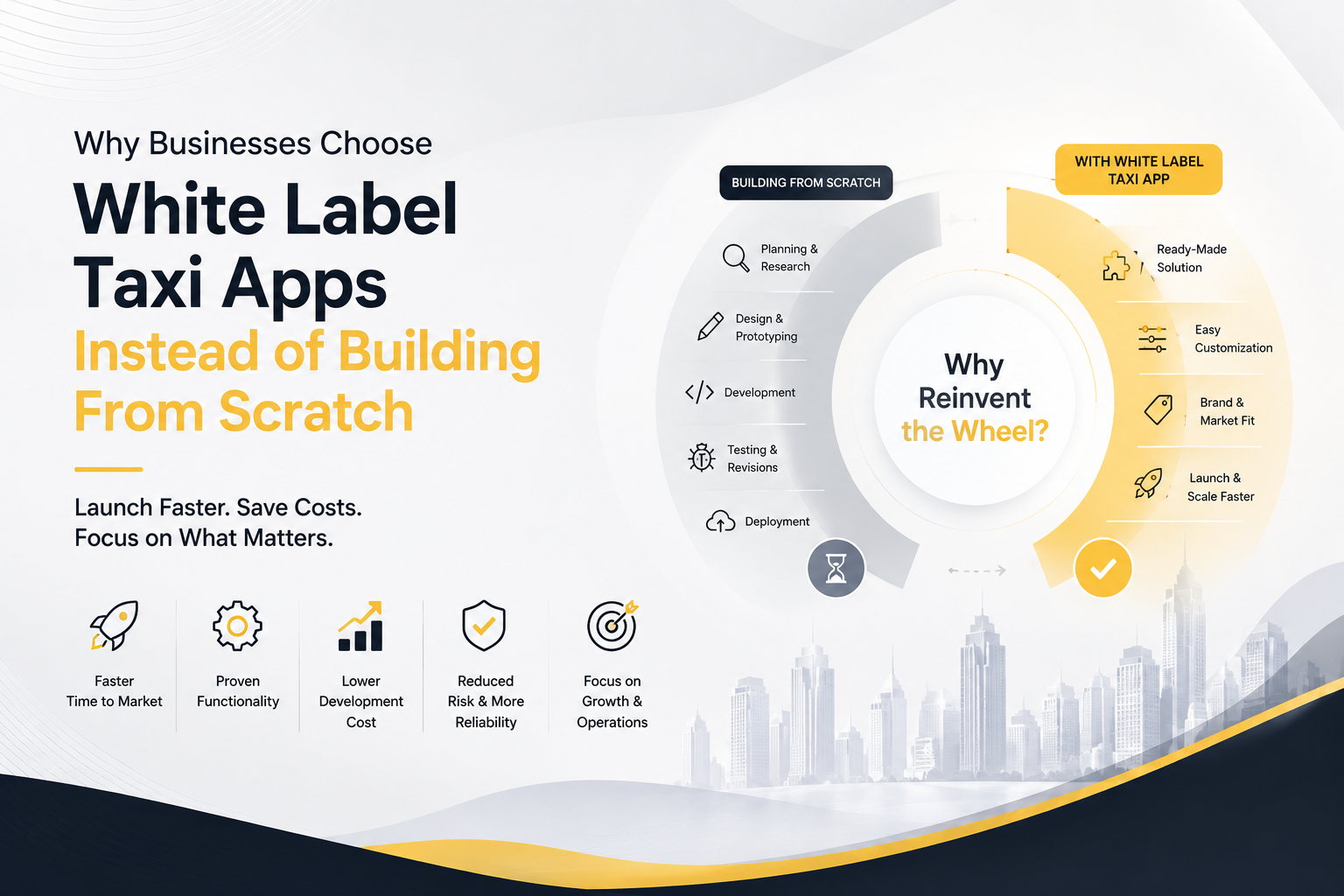
2. Why Businesses Are Choosing White Label Taxi Apps Instead of Building From Scratch
There was a time when building a ride-booking platform from scratch was considered the only serious option.
A company would hire designers, assemble a development team, define workflows, create rider experiences, build driver tools, develop an admin dashboard, test every feature, fix unexpected issues, and only then begin preparing for launch.
The problem is that customers never see those months of effort.
They only see the final product.
This is one reason many businesses now choose a white label taxi app instead of pursuing a lengthy development cycle. The market already knows how ride-booking works. Riders expect destination search, vehicle selection, trip tracking, ride history, and secure account management. Drivers expect ride requests, earnings visibility, and profile controls. Rebuilding these common experiences repeatedly often adds time without creating a competitive advantage.
That shift has made the Uber clone app category increasingly attractive to startups and transportation operators. Rather than allocating resources to features that have already been solved, businesses can begin with an established foundation and focus on branding, operations, customer acquisition, and service quality.
The difference becomes even more noticeable when launch timelines are considered.
A custom transportation platform typically requires multiple stages of planning, development, testing, revisions, and deployment. Every additional feature introduces new dependencies and additional validation requirements. A ready-made white label taxi app already includes these essential workflows, allowing teams to move directly into customization and business preparation.
This is where solutions such as ride swift become valuable. Instead of creating ride-booking systems, driver onboarding flows, administrative approval processes, referral programs, and operational dashboards from the ground up, businesses can start with a complete Uber clone app and adapt it to their specific market.
Another factor driving adoption is predictability.
When companies choose established flutter app templates, they gain visibility into what the platform already supports before development begins. Business owners can review rider journeys, driver operations, administrative controls, and growth features early in the process rather than discovering requirements midway through a project.
The flexibility is important as well.
A modern white label taxi app is not intended to force every business into the same model. Different cities, transportation providers, and fleet operators have different operational needs. Starting from a customizable foundation allows businesses to launch with proven functionality while still maintaining control over branding and customer experience.
For founders evaluating development options, the question is often less about whether they can build a transportation platform and more about whether they should. When a solution already provides rider, driver, and admin applications in a single package, many businesses conclude that beginning with an Uber clone app is simply a faster route to market. That reality is one reason flutter app templates continue gaining attention among companies searching for the best uber clone script for their next transportation venture.
3. What Does a Complete Ride-Booking Platform Actually Need?
One of the biggest mistakes founders make is assuming that a ride-booking business revolves around a single application.
It doesn't.
What customers see is only one part of the operation. Behind every successful transportation platform is a system that connects riders, drivers, and administrators. Remove any one of those pieces, and the business quickly runs into operational problems.
This is why building an Uber clone app is rarely about creating a booking screen and a map. A successful Uber clone app must support every stage of the ride journey, from customer registration and trip requests to driver onboarding and platform management. Businesses evaluating an Uber clone app often discover that the complexity comes from managing these connected workflows rather than from ride booking itself.
The rider experience is usually the starting point.
Customers expect a platform where they can sign up, choose pickup and drop-off locations, compare vehicle options, confirm bookings, monitor ride progress, review trip history, and manage their accounts. These features are no longer considered premium additions. They are basic expectations. Any white label taxi app entering the market today must deliver a smooth and reliable rider experience if it wants to compete effectively.
But riders alone cannot keep the platform running.
Drivers need their own environment with dedicated tools and workflows. A modern white label taxi app should support driver registration, vehicle information management, document submission, ride requests, active trip management, earnings visibility, and performance tracking. Without these capabilities, scaling operations becomes significantly more difficult.
Then there is the administrative side of the business.
Every transportation platform needs a process for approving drivers, reviewing documentation, managing users, creating promotions, and sending notifications. This is where many businesses realize that choosing a complete white label taxi app is often more practical than trying to assemble multiple systems together. Administrative efficiency directly impacts the quality of the rider and driver experience.
Technology decisions matter as well.
Businesses searching for flutter app templates are usually looking for ways to accelerate development without sacrificing flexibility. Unlike traditional projects that begin with an empty codebase, flutter app templates provide established workflows that can be customized and expanded. This approach allows companies to focus on launching and operating the business rather than rebuilding common transportation features.
Ride Swift was created with these requirements in mind.
Instead of delivering only a rider application, it provides a complete ecosystem consisting of rider, driver, and admin experiences. As one of the more comprehensive flutter app templates available in this category, ride swift gives businesses a foundation that already supports the operational needs of a transportation service.
For companies comparing options, the best uber clone script is rarely the one with the longest feature list. The best uber clone script is the one that addresses real operational requirements. The best uber clone script should help businesses manage riders, support drivers, and oversee daily operations from a connected platform.
That is exactly why businesses exploring an Uber clone app, researching flutter app templates, or evaluating a scalable white label taxi app often place completeness at the top of their requirements list. Before launching a transportation business, it is worth asking a simple question: does the platform support every participant involved in the ride experience? The answer often determines whether a project can scale successfully in the long run.
4. Complete Feature Breakdown: User App, Driver App, and Admin App
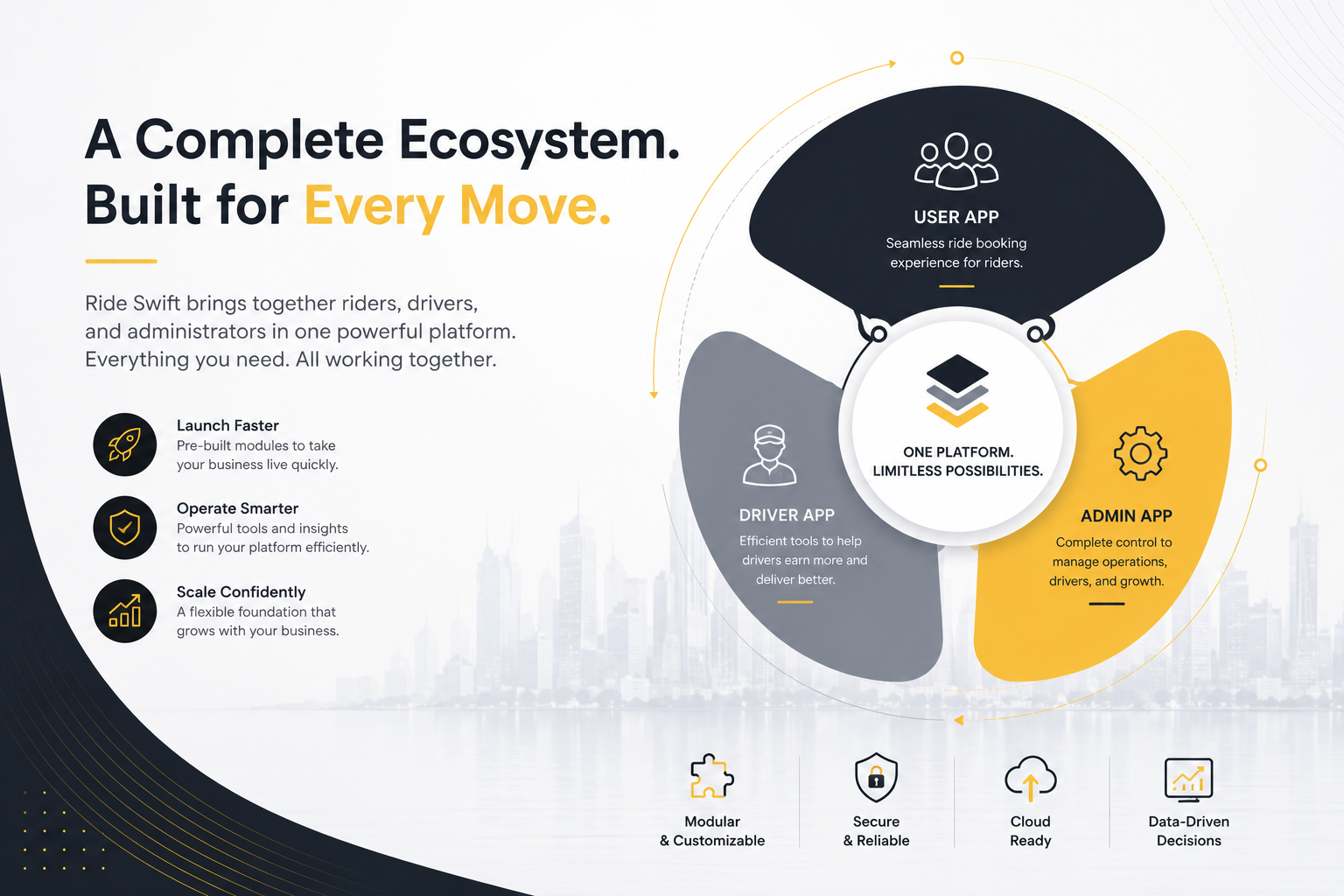
A successful Uber clone app is much more than a ride-booking screen. Behind every completed trip is a complete ecosystem connecting riders, drivers, and administrators. This is why businesses evaluating a white label taxi app should look beyond basic ride-booking functionality and examine how every participant interacts with the platform.
Ride Swift includes three dedicated applications: a User App for riders, a Driver App for partners, and an Admin App for platform management. Together, these components create a complete transportation ecosystem that helps businesses launch faster using one of the most practical flutter app templates available today.
User App Features
The User App focuses on helping customers book rides, manage trips, and interact with the platform efficiently.
Account & Onboarding
- Splash Screen – Displays app branding and creates a professional first impression.
- Sign Up / Login – Phone OTP authentication for quick and secure account access.
- Get Started – Introductory onboarding experience for new users.
Ride Discovery & Booking
- Home Feed – Displays vehicle categories, recent locations, and ride recommendations.
- Plan a Ride – Pickup and drop-off selection using maps or search.
- Vehicle Selection – View vehicle options, pricing, offers, and descriptions.
- Ride Booking – Confirm rides, connect with drivers, and cancel bookings when necessary.
- Ride Confirmation – Access driver details, vehicle information, ride OTP, and call options.
Ride Management
- Live Ride – Real-time ride status, driver information, and emergency alerts.
- Post-Ride Reviews – Rate and review drivers after trip completion.
- Activity – Access ride history, filters, and rebooking functionality.
- Ride Detail – Complete trip breakdown including timings and fare details.
Convenience Features
- Services – Browse all available vehicle categories.
- Saved Places – Add, edit, or remove Home, Work, and custom locations.
- Emergency Contacts – Add trusted contacts for ride-related safety notifications.
- Wallet – View balance and referral earnings.
- Promo Codes – Apply discounts during bookings.
- Referral Code – Copy and share personal referral codes.
- Edit Profile – Manage name, photo, and gender information.
- Account – Logout and account deletion controls.
A strong Uber clone app must provide more than ride booking. These rider-focused features help improve engagement, retention, and overall customer satisfaction.
Driver App Features
The Driver App helps partners manage onboarding, ride requests, trip execution, and earnings.
Registration & Setup
- Splash & Welcome – Branding and account access options.
- Sign Up / Login – OTP-based authentication.
- Registration – Driver details, city selection, referral code, and terms acceptance.
- Vehicle Preference – Choose the vehicle type used for earning rides.
- Language Selection – Personalize the application language.
- Onboarding Summary – Review registration information before proceeding.
Verification Process
- Document Upload – Submit license, photo, SSN, registration, and insurance documents.
- Vehicle Details – Add plate number, vehicle color, and vehicle photos.
- Emergency Contacts – Optional safety contacts.
- Declaration & Consent – Legal agreement and consent process.
- Profile Under Review – Restricted access until approval.
Ride Operations
- Home – Live map displaying current driver location.
- Online / Offline Toggle – Control ride availability.
- Incoming Ride Request – View pickup, drop-off, and fare details before accepting.
- Active Ride – Route map, arrival confirmation, and PIN verification.
- Ride in Progress – Destination details, fare information, and trip completion controls.
Performance Tracking
- Completed Rides – Full ride history with dates and fares.
- Reviews – Customer ratings and feedback.
- Earnings – Monthly earnings breakdown.
- Edit Profile – Update profile details and manage account settings.
Businesses searching for the best uber clone script often evaluate driver workflows carefully because driver efficiency directly impacts customer experience.
Admin App Features
The Admin App provides operational control over the entire platform.
Driver Management
- Login – Secure OTP authentication.
- Dashboard – View newly registered drivers awaiting approval.
- Driver Approval – Review submitted documents and approve or reject applications.
- Registered Users List – Search and browse approved drivers.
- Driver Detail – Access complete driver profiles and documentation.
- Remove Driver – Revoke driver access when necessary.
Growth & Engagement Tools
- Promo Codes – Create discounts for specific vehicle categories or platform-wide campaigns.
- Send Notification – Deliver targeted messages to riders or drivers.
Account Management
- Profile – View administrator information.
- Logout – Securely exit the platform.
For businesses evaluating flutter app templates, administrative controls are just as important as rider and driver experiences. A scalable white label taxi app requires efficient operational management, communication tools, and driver approval workflows. This is also why companies comparing the best uber clone script often prioritize complete ecosystems over isolated feature sets.
Taken together, these rider, driver, and admin capabilities make ride swift a comprehensive Uber clone app, a scalable white label taxi app, and one of the most complete flutter app templates available for transportation businesses today.
5. What Does It Cost to Build an Uber Clone App?
One of the most common questions founders ask before entering the transportation industry is simple: how much does it cost to build an Uber clone app?
The answer depends largely on the development approach.
Many businesses begin with the assumption that they only need a rider application. Once planning starts, however, they quickly realize that a complete Uber clone app requires much more than ride booking. Riders need an intuitive booking experience, drivers need tools to manage trips and earnings, and administrators need systems for approvals, promotions, and operational management.
As these requirements grow, so does the overall development effort.
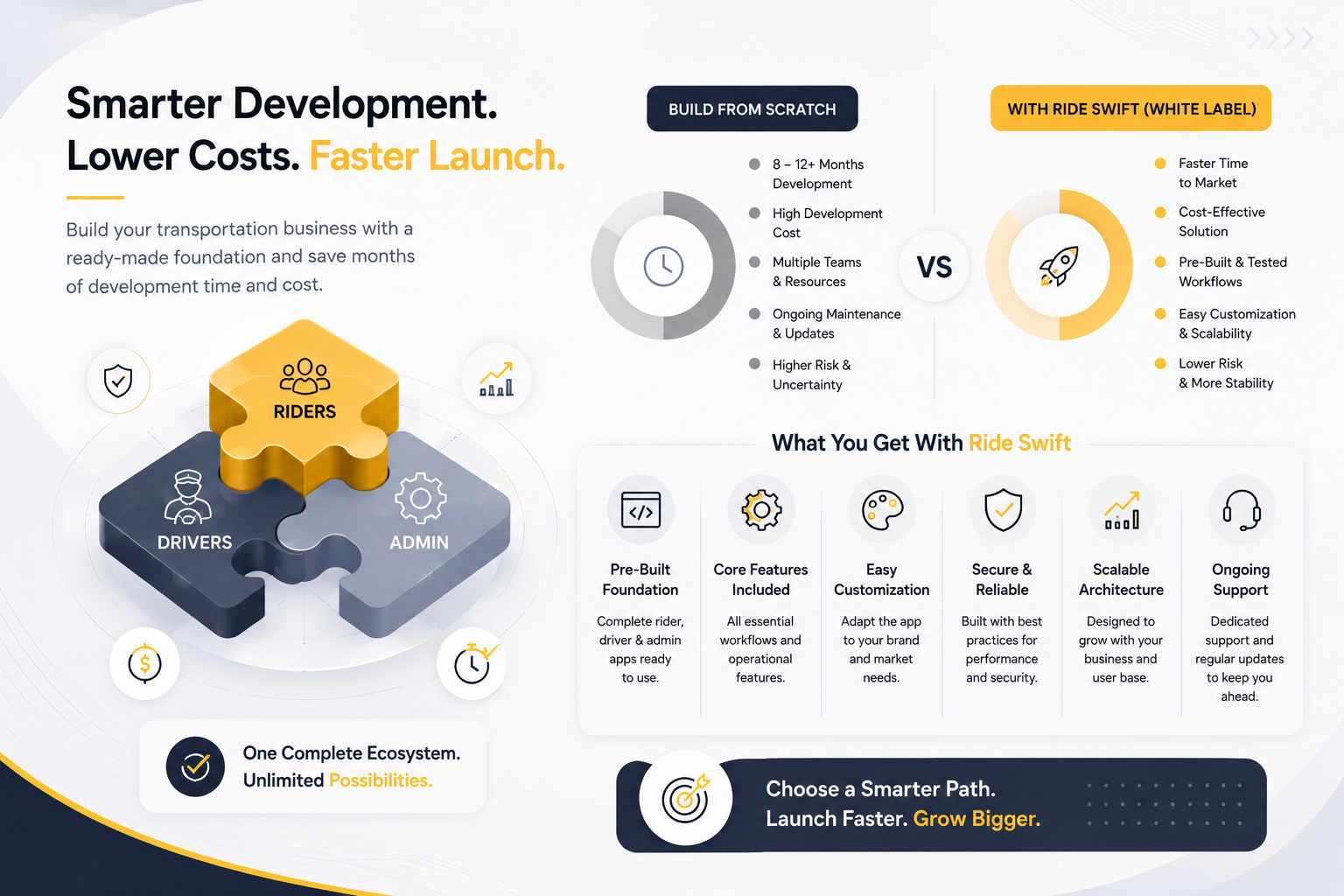
The Cost of Building From Scratch
Building a transportation platform from the ground up typically involves multiple stages:
- Product planning
- UI/UX design
- Rider application development
- Driver application development
- Admin panel development
- Backend setup
- Authentication implementation
- Payment integration
- Testing and quality assurance
- Deployment preparation
Each stage requires time, resources, and technical expertise. Even after launch, businesses must continue investing in updates, maintenance, bug fixes, and feature improvements.
This is one reason many startups begin exploring a white label taxi app instead of committing to a lengthy development cycle.
Why Costs Increase So Quickly
The challenge is not usually a single feature.
The challenge is building and connecting dozens of workflows across different user groups.
A modern Uber clone app must support:
- Rider onboarding
- Driver onboarding
- Ride requests
- Ride tracking
- Driver approvals
- Notifications
- Promotions
- Account management
Every additional workflow increases complexity. As a result, businesses often spend significant resources recreating features that already exist in established transportation platforms.
How a White Label Taxi App Reduces Development Costs
A white label taxi app provides a ready-made foundation that businesses can customize instead of building from scratch.
Rather than investing months developing common transportation features, companies can begin with:
- Existing rider workflows
- Existing driver workflows
- Existing admin controls
- Pre-built operational systems
This significantly reduces development effort while helping businesses move toward launch faster.
The Advantage of Flutter App Templates
This is where flutter app templates have become increasingly popular.
Instead of starting with an empty codebase, businesses can work with functionality that already supports transportation operations. The strongest flutter app templates allow teams to focus on branding, customization, driver acquisition, and business growth rather than rebuilding standard workflows.
For many founders, the value of flutter app templates comes from reducing both development risk and launch delays.
Why ride swift Is a Practical Alternative
Ride Swift already includes a User App, Driver App, and Admin App, along with ride-booking workflows, driver approval processes, notifications, referrals, wallet functionality, and promotional tools.
For businesses evaluating the best uber clone script, this can dramatically reduce the amount of work required before launch. The best uber clone script is not necessarily the one with the largest feature list. It is the one that provides a strong operational foundation while remaining flexible enough for customization.
Ultimately, the cost of an Uber clone app depends on whether businesses choose to build everything from the ground up or start with a proven white label taxi app. For many transportation startups, modern flutter app templates provide a faster and more cost-effective route to market while delivering the functionality expected from the best uber clone script available today.
6. The Technology Choices You Make Today Affect What Happens After Launch
Most ride-booking projects don't fail because of missing features.
They struggle because the technology underneath those features becomes difficult to maintain.
A new city needs to be added.
A payment workflow needs to be adjusted.
A notification campaign needs to be launched.
A driver onboarding process needs to be updated.
None of these changes sound complicated. Yet they become expensive when the platform wasn't built with flexibility in mind.
This is one reason founders evaluating an Uber clone app often spend time looking beyond the feature list. Features attract attention during a demo. Technology affects what happens after the platform goes live.
Ride Swift is built using Flutter, Supabase, OneSignal, and Stripe.
Not because those names look good on a specification sheet.
Because each one solves a practical business problem.
Flutter
The transportation industry moves quickly.
Businesses launch new services, adjust workflows, introduce promotions, and refine customer experiences regularly. Using Flutter makes those changes easier to manage because the platform is built on a modern development foundation.
For companies exploring flutter app templates, this matters because the goal is rarely to launch once and never update again. Most transportation businesses continue evolving after launch.
That is one reason flutter app templates remain popular among startups looking for speed without sacrificing flexibility.
Supabase
Every action inside an Uber clone app generates data.
Users create accounts.
Drivers submit documents.
Trips are completed.
Promotions are redeemed.
Over time, that information becomes one of the most valuable assets inside the business.
Supabase supports the backend infrastructure that keeps those operations organized and accessible.
OneSignal
Communication plays a larger role than many founders expect.
Drivers need updates.
Customers expect information.
Promotional campaigns require delivery channels.
Operational announcements need visibility.
For businesses running a white label taxi app, communication isn't an optional feature. It's part of daily operations. OneSignal helps support those interactions throughout the platform.
Stripe
A ride is only complete when payment is complete.
That makes payment infrastructure one of the most important parts of any transportation platform.
Businesses searching for the best uber clone script often focus heavily on booking workflows, but payment handling is equally important. Customers expect transactions to feel simple. Operators expect them to be reliable.
Stripe helps support those requirements inside Ride Swift.
Why This Matters for Businesses
Technology decisions are easy to ignore when a project is still being planned.
They become much harder to ignore six months after launch.
That is why businesses comparing a white label taxi app, reviewing flutter app templates, or searching for the best uber clone script often look beyond screenshots and feature lists. They want a platform that can support growth without forcing major redevelopment later.
For transportation businesses, that flexibility is often just as valuable as the features themselves. And that is one reason the technology behind an Uber clone app deserves attention before launch rather than after it.
7. Launching a Ride-Booking Business Doesn't Have to Start From Scratch
There is a question many founders ask surprisingly late in the process.
Not:
"Can we build a ride-booking platform?"
Most teams eventually figure that out.
The more important question is:
"Do we need to build everything ourselves?"
By the time a business starts evaluating an Uber clone app, the transportation industry is no longer the unknown opportunity it once was. Customers already understand how ride-booking works. Drivers already understand how accepting trips through an application works. The challenge is not educating the market.
The challenge is getting to the market.
This is where many projects become stuck.
A feature list grows.
Development estimates increase.
New requirements appear.
Months pass before real users ever interact with the product.
The irony is that much of this effort is often spent recreating functionality that already exists.
User registration.
Ride booking.
Driver onboarding.
Trip management.
Administrative controls.
These are essential features, but they are also features that businesses have solved many times before.
That reality is one reason interest in the Uber clone app category continues to grow. Businesses are increasingly asking whether their time is better spent rebuilding common transportation workflows or growing the business itself.
Ride Swift was created for founders facing that decision.
Instead of beginning with an empty project, businesses start with a complete ecosystem that already includes rider, driver, and admin applications. The platform already supports the operational foundations required by a modern transportation service.
That changes the conversation.
Instead of asking:
"How do we build ride booking?"
Businesses can ask:
"How do we acquire our first customers?"
Instead of asking:
"How do we create a driver onboarding process?"
They can ask:
"How do we build a reliable driver network?"
Those are very different challenges.
And they are usually much closer to revenue generation.
This is one reason many founders exploring a white label taxi app view ready-made solutions differently today than they did a few years ago. The goal is not to avoid customization. The goal is to avoid rebuilding functionality that already exists.
The same thinking explains why demand for flutter app templates continues to increase. Businesses want flexibility, but they also want momentum. Modern flutter app templates allow teams to customize and launch without spending months constructing every workflow from the ground up.
Of course, launching a transportation business still requires preparation.
Drivers need to be onboarded.
Operations need to be organized.
Marketing needs to be planned.
Customers need a reason to choose the platform.
But those challenges are business challenges.
They are different from spending months developing systems that are already available inside a complete Uber clone app.
For founders evaluating the best uber clone script, this distinction matters. The best uber clone script is not simply the one with the largest collection of features. The best uber clone script is the one that allows businesses to move their attention away from rebuilding common functionality and toward growing the company itself.
That is ultimately where ride swift creates value.
It shortens the distance between an idea and a launch.
And for many transportation businesses, that can be far more important than adding another feature to an already crowded development roadmap.
8. Conclusion
Imagine two founders starting with the same idea.
Both want to launch a transportation business.
Both understand their local market.
Both know there is demand for ride-booking services.
The difference appears in how they decide to move forward.
The first spends months planning features, managing development tasks, reviewing designs, fixing bugs, and rebuilding systems that already exist in dozens of transportation platforms.
The second starts with a complete Uber clone app, customizes it to match their business, and focuses their energy on attracting riders, onboarding drivers, and growing operations.
Neither approach is necessarily wrong.
But one approach usually reaches the market much sooner.
That distinction matters because transportation businesses are built around activity. Drivers need rides. Riders need availability. Businesses need momentum. Every month spent rebuilding standard functionality is a month that could have been spent growing the platform itself.
Throughout this guide, we've looked at what a modern Uber clone app actually requires. It's not just a booking screen and a map. A successful transportation platform needs a complete rider experience, efficient driver workflows, and operational controls that help businesses manage daily activity. Those requirements are exactly why many founders begin exploring a white label taxi app instead of starting from a blank project.
Ride Swift was built with that reality in mind.
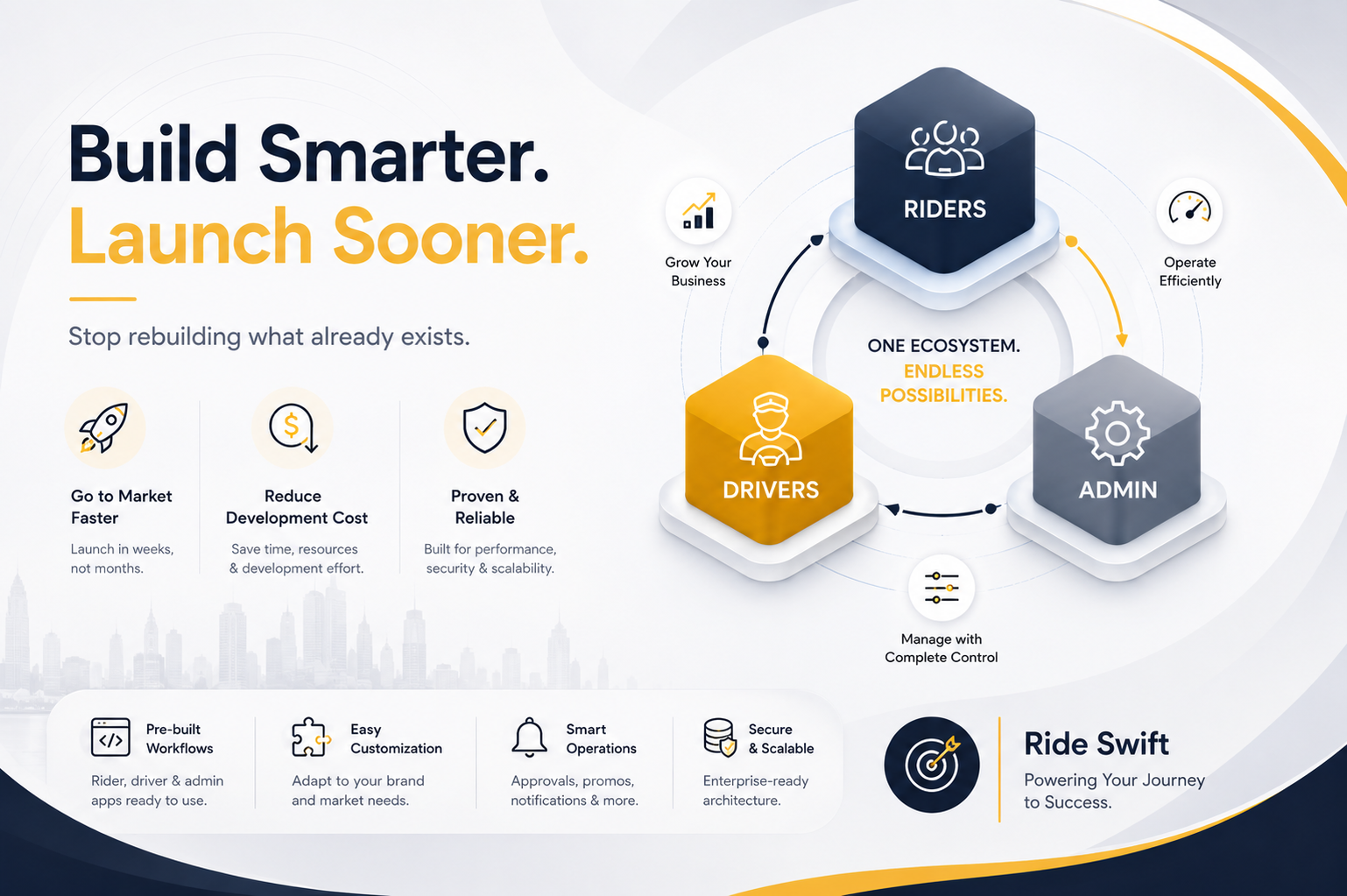
The platform combines a User App, Driver App, and Admin App into a single ecosystem designed to support transportation businesses from launch onward. Riders can book and manage trips, drivers can handle requests and earnings, approvals, promotions, and operations from one connected platform.
For businesses evaluating flutter app templates, this creates a practical advantage. Instead of spending valuable resources recreating common transportation workflows, teams can focus on branding, operations, customer acquisition, and service quality. That is one reason flutter app templates continue attracting startups and transportation businesses looking for a faster route to market.
The same principle applies when comparing solutions in search of the best uber clone script. The best uber clone script is rarely the one with the longest list of features. It is the one that helps businesses launch efficiently while still providing the flexibility needed to adapt and grow over time.
At the end of the day, customers don't see development timelines.
They don't see technical roadmaps.
They don't see planning documents.
They see the experience.
They see how quickly they can book a ride.
They see how reliably the platform works.
They see whether the service solves a real problem.
For founders considering a scalable white label taxi app, exploring modern flutter app templates, or searching for the best uber clone script, the goal is ultimately the same: launch with confidence and start building a real business.
Ride Swift provides a foundation for exactly that. And sometimes, choosing the right foundation is the decision that makes everything else move faster.
FAQ
1. How long does it take to launch an Uber clone app?
With a ready-made Uber clone app like ride swift, businesses can launch much faster than building everything from scratch.
2. Does ride swift include rider, driver, and admin apps?
Yes. ride swift includes a User App, Driver App, and Admin App, making it a complete white label taxi app solution.
3. Can I customize ride swift for my business?
Yes. Like many modern flutter app templates, ride swift can be customized to match your branding and business requirements.
4. What makes the best Uber clone script?
The best uber clone script includes rider, driver, and admin functionality while remaining scalable and easy to customize.
5. Why choose a white label taxi app?
A white label taxi app helps businesses reduce development time, lower costs, and reach the market faster.


View more blogs


.png)

%20%5Bweb-search%5D_a_change__2025__to__20.jpg)
.png)

.png)
.png)
.png)

Ready to develop your own product? Get in touch today!
Get in Touch
