

.png)

.png)


1. Introduction
Ask five people what they ate yesterday and most of them will remember the big things.
Breakfast.
Lunch.
Dinner.
Ask them about everything in between, and the answers usually become less certain.
A handful of chips while working. An extra coffee. A late-night snack that didn't feel important at the time.
Those small decisions add up. The challenge is that most people never see the full picture.
That's why nutrition tracking has become such a common habit. Not because people enjoy logging food, but because visibility changes behavior. When users can actually see what they're eating, patterns become easier to spot and goals become easier to manage.
Platforms like Alma built an audience around that simple idea.
MealMate follows the same direction. Built as an alma clone app, it gives businesses a way to launch AI-powered food tracking and nutrition platforms without starting from zero. Instead of spending months building infrastructure, companies can begin with a diet planner app template and focus on creating value for users.
The timing makes sense.
Consumers are paying closer attention to nutrition than they did a few years ago. Weight management, fitness goals, healthier eating habits, and long-term wellness are no longer niche interests. They're part of everyday conversations.
For businesses entering this space, speed matters. Many are choosing white label mobile apps because they want ownership of their brand without the delays that come with custom development. Through the best mobile app marketplace, solutions like MealMate make it possible to launch faster while maintaining flexibility for future growth.
As demand continues to grow, the combination of an alma clone app, adaptable white label mobile apps, and a proven diet planner app template is becoming an increasingly practical route for companies building nutrition-focused products.
2. Why Businesses Choose a Diet Planner App Template Instead of Building From Scratch
Most app ideas look surprisingly simple at the beginning.
A founder wants users to track meals. Nutrition data should be easy to understand. Progress should be visible. Maybe there is some AI involved to make the experience faster and more engaging.
On a whiteboard, it all seems straightforward.
The complexity appears later.
A nutrition platform isn't just a collection of screens. User accounts need to work reliably. Food logging needs to feel effortless. Progress data needs to be stored accurately. Notifications, analytics, subscriptions, performance, security, and ongoing updates all become part of the equation. What starts as a product idea often turns into a long development roadmap.
This is where many businesses begin looking at a diet planner app template differently.
A few years ago, templates were often viewed as shortcuts. Today, they're increasingly viewed as business accelerators. Companies aren't choosing a diet planner app template because they lack ambition. They're choosing one because speed has become a competitive advantage.
The health and wellness market moves quickly. Consumer expectations evolve. New products enter the market every month. Waiting six or eight months to release a first version can mean missing valuable opportunities to gather feedback and build an audience.
That reality explains why demand for white label mobile apps continues to increase.
Businesses want the freedom to launch under their own brand without committing to lengthy development cycles before validating an idea. With white label mobile apps, founders can focus on user acquisition, customer retention, and market positioning rather than spending most of their resources building infrastructure.
MealMate was created with that challenge in mind.
Built as an alma clone app, MealMate provides a foundation for businesses that want to launch an AI-powered nutrition platform without starting from a blank screen. Instead of investing months developing basic functionality, companies can begin with a proven diet planner app template and focus on what actually differentiates their business.
There is another advantage that often gets overlooked.
Launching earlier creates learning opportunities.
Real users behave differently than planning documents predict. Features that seem essential sometimes receive little attention. Small improvements can have a larger impact than major redesigns. Businesses that launch sooner gain access to insights that simply aren't available during development.
That is one reason many startups exploring an alma clone app prioritize speed alongside functionality. The objective is not just to launch an application. The objective is to launch, learn, improve, and grow.
For organizations searching through the best mobile app marketplace, the value proposition becomes clear. A reliable diet planner app template reduces development complexity, shortens time-to-market, and allows teams to focus on building a business rather than rebuilding common functionality.
Combined with the flexibility offered by white label mobile apps, businesses gain a practical path toward launching a branded nutrition platform while avoiding many of the challenges associated with traditional development. In an increasingly competitive market, that advantage can be difficult to ignore.
3. Why AI Food Tracking Is Reshaping Digital Health
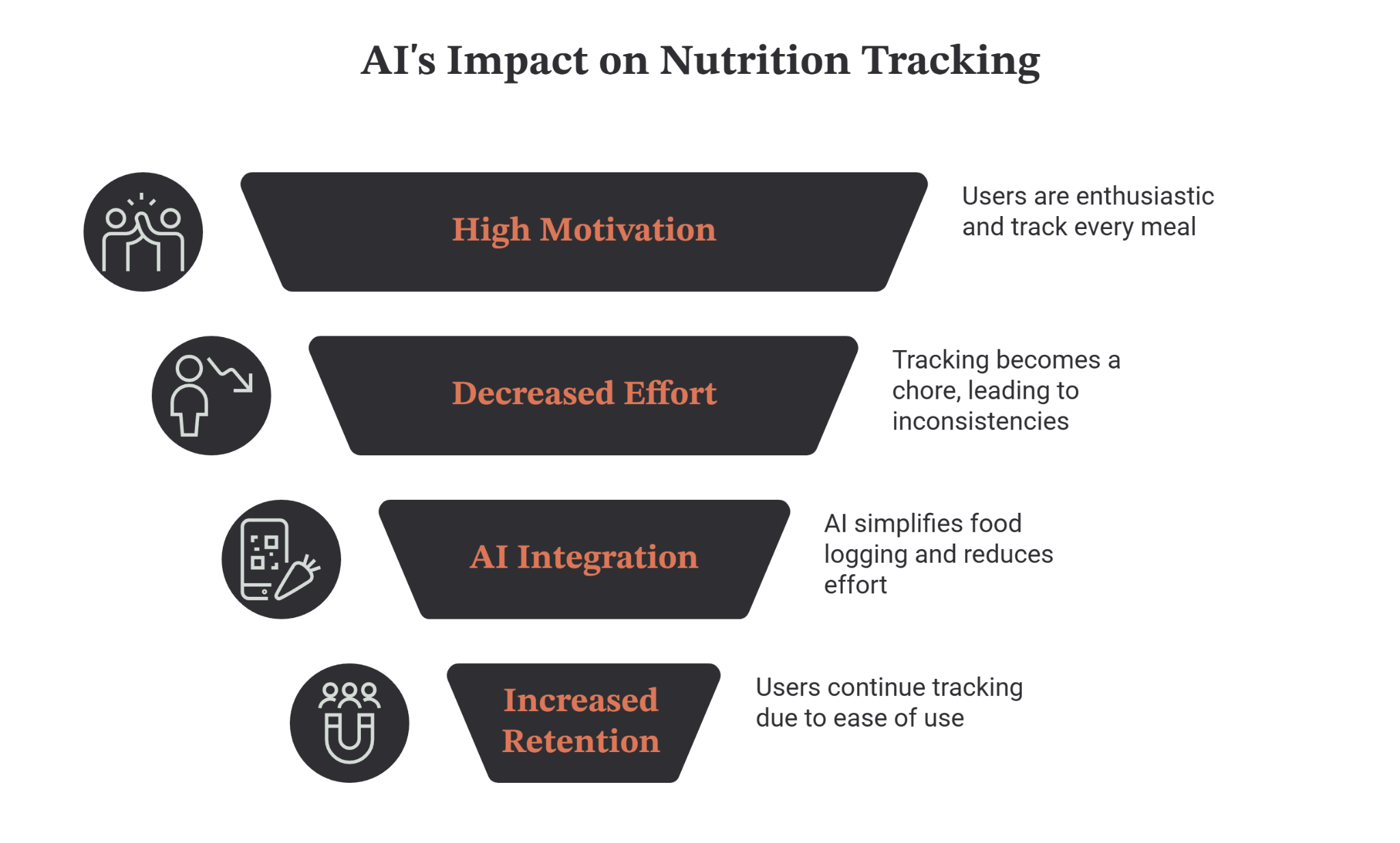
Most people don't quit tracking their meals because they stop caring about their health.
They quit because tracking becomes annoying.
The first few days are usually easy. Motivation is high. Every meal gets recorded. Every calorie feels important.
A week later, things start slipping.
Someone forgets to log breakfast. Lunch gets entered hours later. Dinner is estimated. By the weekend, tracking has become another task on an already busy schedule.
It's a pattern that repeats itself across almost every nutrition platform.
The problem isn't awareness.
The problem is effort.
People want the benefits of nutrition tracking without turning it into a daily administrative task. They want better visibility into their eating habits, but they don't necessarily want to spend ten minutes recording every meal they consume.
That expectation is changing how digital health products are being built.
Businesses entering this space are paying closer attention to user behavior than ever before. They understand that adoption is only the beginning. The bigger challenge is encouraging users to return tomorrow, next week, and next month. This is one reason interest in the alma clone app model continues to grow.
The platforms gaining traction today are often the ones that remove friction rather than add more features.
For businesses evaluating a diet planner app template, this shift is important. Success is rarely determined by how much information an application can display. It is often determined by how easily users can interact with that information on a consistent basis.
Artificial intelligence is helping address that challenge.
Instead of requiring users to manually manage every aspect of nutrition tracking, newer experiences are designed to make food logging faster, more intuitive, and less repetitive. The objective is simple: reduce effort without reducing value.
This is one reason many entrepreneurs exploring an alma clone app see AI-powered nutrition products as a growing opportunity. Consumers are becoming more health conscious, but they are also becoming less patient with complicated user experiences.
The growing adoption of white label mobile apps reflects the same trend. Businesses want the ability to launch modern health products without spending years building technology from scratch. Through white label mobile apps, companies can focus more on branding, user acquisition, and long-term growth.
For founders searching through the best mobile app marketplace, nutrition technology remains an attractive category because the underlying problem is universal. Everyone eats. Everyone makes food choices. Many people want to make better ones.
A reliable diet planner app template combined with a scalable alma clone app provides a practical foundation for businesses looking to meet that demand. Supported by customizable white label mobile apps and solutions available through the best mobile app marketplace, companies can enter the market with a clearer path toward building products that users genuinely want to keep using.
4. How Nutrition Tracking Apps Create Long-Term User Engagement
Most people have experienced some version of this.
A health goal starts on Monday.
Meals are planned. Motivation is high. Progress feels inevitable.
A few weeks later, life gets busy.
Work becomes demanding. Travel interrupts routines. Social events appear unexpectedly. The goal itself hasn't changed, but the attention being given to it has.
This is usually where health and wellness products succeed or fail.
Not at the moment someone downloads an application.
Not during onboarding.
Not even during the first week.
The real test comes later, when enthusiasm fades and everyday life takes over.
Many nutrition platforms struggle at this stage because they focus heavily on acquisition and very little on retention. Getting users through the front door is important, but keeping them engaged is what determines whether a product becomes part of someone's routine.
The interesting thing is that engagement rarely comes from complexity.
People don't return to an application because it contains more charts, more dashboards, or more settings. They return because the product remains useful.
A quick glance before lunch.
A small check-in at the end of the day.
A moment of awareness before making a decision.
These interactions may seem insignificant, yet they are often what create long-term engagement.
This is one reason the alma clone app category continues attracting attention from businesses entering the digital health space. Nutrition is not a once-a-month activity. It is something people think about multiple times every day. When a platform becomes part of that process, engagement tends to happen naturally.
For founders evaluating a diet planner app template, this distinction matters. Features can attract attention, but habits create retention. A product that fits into existing routines often performs better than one that constantly asks users to change their behavior.
The same thinking explains the growing popularity of white label mobile apps. Businesses are increasingly looking for ways to create direct relationships with users rather than relying on third-party platforms. Through white label mobile apps, companies can build experiences that reflect their brand while maintaining control over the customer journey.
For organizations exploring opportunities through the best mobile app marketplace, long-term engagement has become one of the most important considerations when evaluating a product. Downloads create visibility. Consistent usage creates value.
That is why many businesses continue investing in the alma clone app model. Supported by a proven diet planner app template, customizable white label mobile apps, and solutions available through the best mobile app marketplace, companies can focus on building products that users continue returning to long after the initial excitement has disappeared.
5. Features That Make MealMate a Powerful alma clone app
The success of a nutrition platform is rarely determined by a single feature.
Users may initially download an application because they're interested in improving their eating habits, managing weight, or following a healthier lifestyle. What determines whether they continue using it, however, is the overall experience. The platform needs to make nutrition tracking feel organized, accessible, and relevant to everyday life.
That is where MealMate stands out.
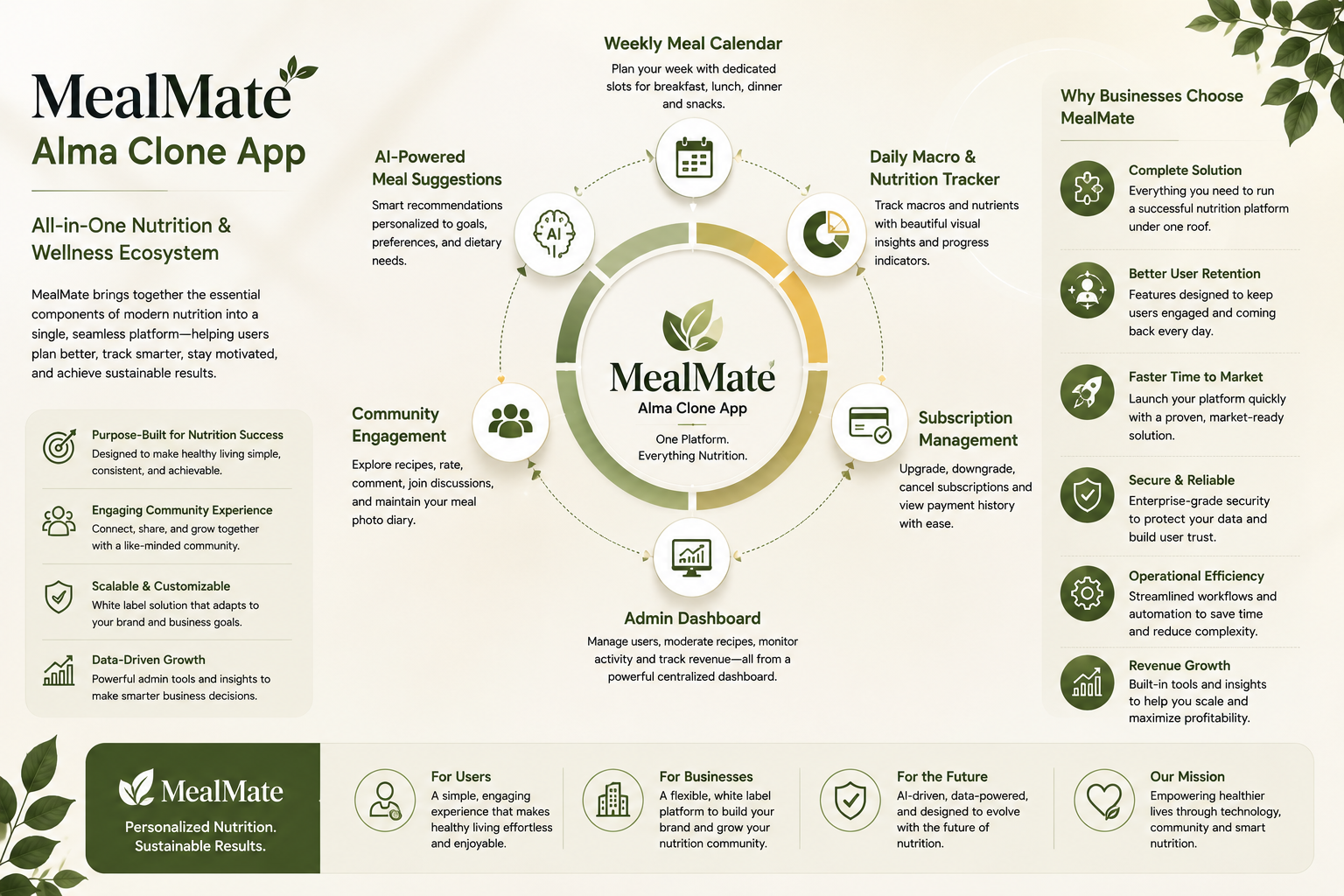
Built as an alma clone app, MealMate combines nutrition planning, food tracking, community engagement, and business management into a single ecosystem. Instead of asking users to rely on multiple tools, the platform brings together the essential components of a modern nutrition experience.
One of the most valuable features is the weekly meal calendar. Users can organize their nutrition plans through dedicated breakfast, lunch, dinner, and snack slots, creating a structured approach to meal planning. For businesses evaluating a diet planner app template, this type of organization helps users stay consistent while making meal preparation easier to manage.
MealMate also incorporates AI-powered meal suggestions tailored to individual dietary goals and preferences. Rather than presenting the same recommendations to every user, the platform helps create a more personalized experience. This capability is one of the reasons many businesses exploring an alma clone app are increasingly interested in AI-driven nutrition solutions.
Tracking progress remains equally important.
The platform includes a daily macro and nutrition tracker supported by visual progress indicators. Users can monitor their nutritional intake more effectively and gain a clearer understanding of how daily food choices align with personal goals. For companies searching for a diet planner app template, progress visibility often plays a significant role in encouraging long-term engagement.
Community participation is another area where MealMate delivers value.
Users can explore community recipes, leave ratings, participate in discussions through comments, and maintain a meal photo diary. These interactions transform nutrition tracking from an individual activity into a shared experience. As a result, businesses using white label mobile apps often find it easier to create active user communities around health and wellness.
From an operational perspective, MealMate includes integrated subscription management capabilities. Users can upgrade plans, downgrade subscriptions, cancel memberships, and review payment history directly within the application. This streamlined experience benefits both users and businesses while reducing administrative complexity.
The platform also includes a comprehensive administrative environment designed to support growth. Through the admin dashboard, businesses can manage users, moderate recipes, monitor platform activity, and review revenue reports from a centralized location. For organizations exploring opportunities through the best mobile app marketplace, these operational tools provide the control needed to manage a growing nutrition platform efficiently.
Together, these capabilities make MealMate more than a standard diet planner app template. As an alma clone app, it combines AI-powered nutrition experiences, structured meal planning, community engagement, subscription management, and administrative oversight within one solution. Supported by the flexibility of white label mobile apps and available through the best mobile app marketplace, MealMate provides businesses with a strong foundation for launching modern nutrition-focused products.
6. The Technology Behind MealMate: Built for Performance, Scalability, and Growth
Technology is one of those things people rarely notice when it works well.
Think about the apps you use every day. You probably remember the experience. You might remember how easy something felt or how quickly you found what you needed. What you probably don't remember is the infrastructure making those interactions possible.
That's usually a good sign.
Nutrition platforms are no different.
Someone checking a meal plan before heading to work isn't thinking about databases. A user reviewing their nutrition progress after dinner isn't wondering how information is being processed in the background. They simply expect the platform to respond quickly, save their data accurately, and remain available whenever they need it.
Those expectations sound simple until you start building the product.
Every meal logged creates data. Every subscription generates activity. Every notification depends on multiple systems working together. As more users join the platform, those interactions multiply rapidly. What feels effortless on the surface is often supported by a considerable amount of work behind the scenes.
When developing MealMate, the goal wasn't to chase technology trends. The focus was much simpler: choose tools that would continue making sense a year from now, not just during launch.
That thinking led to Flutter.
People move between devices constantly. They expect a familiar experience wherever they access a product. For businesses selecting a diet planner app template, consistency often influences user satisfaction more than flashy functionality. Flutter helps support that consistency while keeping the overall experience responsive and reliable.
The same mindset influenced backend decisions.
An alma clone app generates ongoing activity rather than occasional interactions. Nutrition records, user profiles, subscription data, and meal history continue growing over time. Supabase provides the infrastructure needed to support that growth without forcing businesses to rebuild core systems as the platform evolves.
Communication was another area that deserved attention.
Most successful nutrition products rely on continued engagement rather than one-time usage. Users return because they're building habits, monitoring progress, and working toward personal goals. OneSignal helps support those ongoing interactions, something many businesses value when launching white label mobile apps aimed at long-term retention.
Payments introduce their own expectations.
People rarely celebrate a payment process that works correctly. They only notice when it doesn't. Stripe helps remove that friction by providing a payment experience that feels familiar, secure, and dependable for both businesses and users.
Individually, none of these technologies tell the whole story.
Collectively, they create the foundation behind MealMate.
For businesses exploring solutions through the best mobile app marketplace, that foundation matters because growth changes everything. What works for a hundred users may not work for ten thousand. A reliable diet planner app template needs to support both.
As an alma clone app, MealMate was built with that reality in mind. Combined with the flexibility of white label mobile apps and the accessibility of the best mobile app marketplace, it provides businesses with a platform designed to support growth without requiring constant reinvention behind the scenes.
7. How Businesses Can Monetize an Alma clone app
A lot of founders spend months thinking about product development and very little time thinking about what happens after launch.
The assumption is that revenue will follow if the product is good enough.
Sometimes it does.
More often, businesses discover that growth comes from creating something users return to repeatedly rather than something they use once and forget.
Nutrition platforms have an interesting advantage here.
People don't make food decisions once a month. They make them several times a day. Breakfast, lunch, dinner, snacks, grocery purchases, health goals—these are recurring behaviors. That creates opportunities that many other app categories simply don't have.
It's one reason interest in the alma clone app space continues to grow.
Businesses entering the market aren't just launching another mobile application. They're entering a category where ongoing engagement is already built into user behavior. A well-positioned alma clone app can benefit from habits that naturally repeat throughout the week.
The monetization side becomes easier when value is delivered consistently.
Users are generally comfortable paying for products that help them stay organized, remain accountable, or simplify complex decisions. This is why many founders start with a diet planner app template instead of spending months building infrastructure from scratch. A proven diet planner app template allows them to focus on creating value rather than rebuilding standard functionality.
There is also a branding element that shouldn't be ignored.
Many businesses eventually realize that owning the customer relationship is just as important as owning the technology. This is where white label mobile apps become attractive. Rather than directing users toward someone else's platform, businesses can create experiences that feel entirely their own. As brands mature, white label mobile apps often provide the flexibility needed to evolve without constantly changing direction.
The route to market matters too.
Founders evaluating options through the best mobile app marketplace are often trying to solve a very practical problem: how to move from idea to launch without unnecessary delays. The best mobile app marketplace helps shorten that journey by providing access to products that already have a strong foundation.
What's interesting is how these decisions connect.
A company may begin with a diet planner app template, build a branded experience through white label mobile apps, launch an alma clone app, and discover opportunities through the best mobile app marketplace that would have taken significantly longer to create independently.
That doesn't guarantee success.
Nothing does.
But it allows businesses to spend more time understanding customers and less time rebuilding systems that already exist.
And for many founders, that's where the real opportunity begins.
8. Launch Your Nutrition Platform Faster with MealMate
There is a question founders rarely ask at the beginning of a project.
Not "Can we build this?"
Most teams eventually figure that part out.
The better question is:
"Should we spend the next six months building something that already exists?"
That question becomes particularly relevant in the nutrition space.
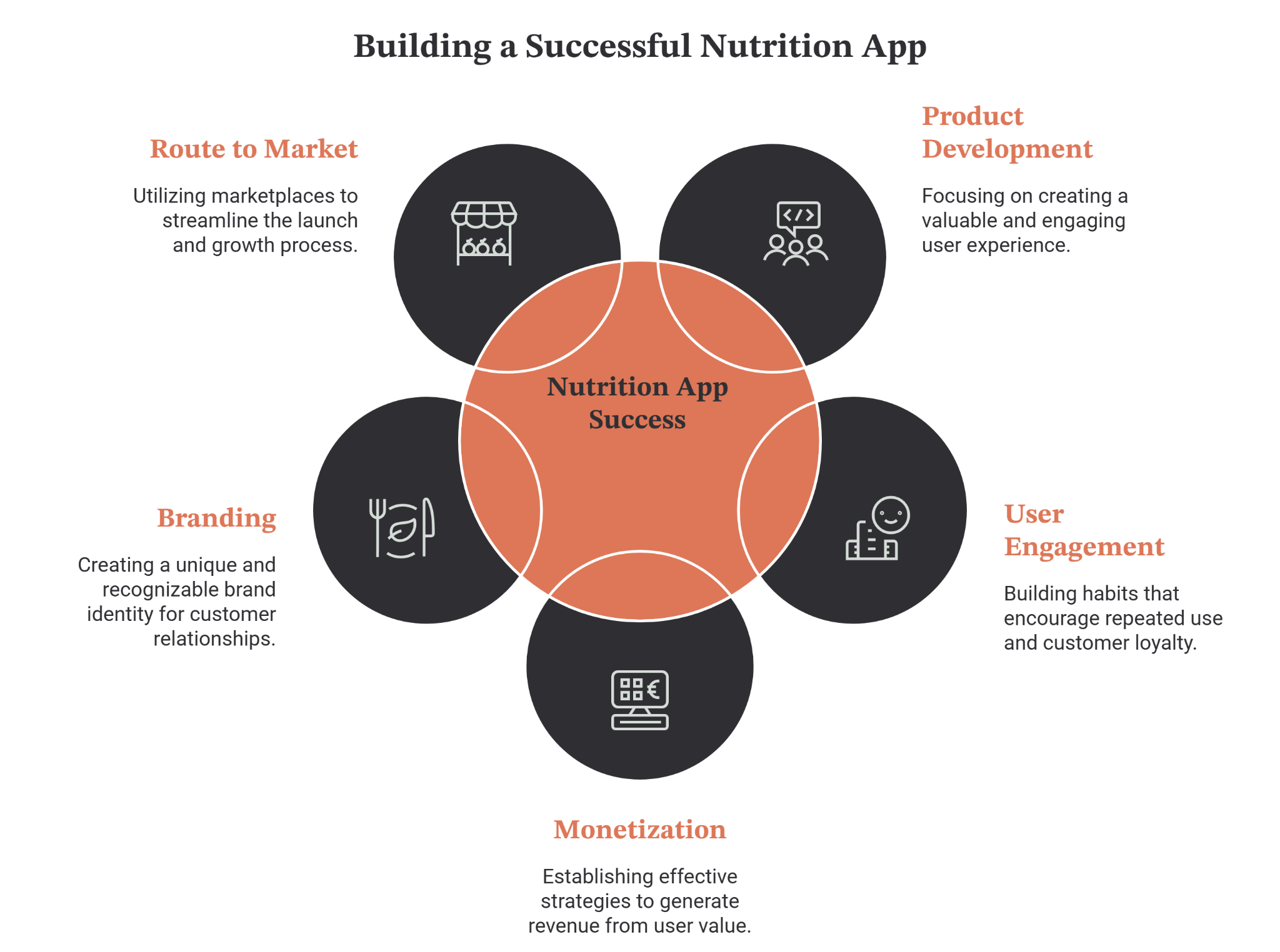
The market is no longer experimental. Consumers already understand food tracking. They already use nutrition applications. They already look for tools that help them make better decisions around health and wellness. In many cases, the opportunity isn't creating demand. The opportunity is reaching that demand before someone else does.
That's one reason interest in the diet planner app template market continues growing.
Founders have started recognizing that development time has a cost beyond money. Every month spent rebuilding common functionality is a month not spent learning from users. A reliable diet planner app template changes that equation by giving businesses a starting point instead of a blank screen.
The same logic explains the popularity of the alma clone app model.
People are not discovering nutrition tracking for the first time. The behavior already exists. The challenge for businesses is creating an experience that feels useful, relevant, and easy to adopt. A well-positioned alma clone app allows founders to focus on those questions rather than spending months solving technical problems that have already been solved elsewhere.
This is where ownership becomes important.
Most businesses don't want to spend years building a brand only to remain dependent on someone else's platform. That reality has contributed to the rise of white label mobile apps. Companies want more control over the customer experience, more flexibility around branding, and greater freedom when making product decisions. For many founders, white label mobile apps represent a practical middle ground between speed and ownership.
The conversation often continues inside the best mobile app marketplace.
Not because founders are searching for shortcuts.
Because they're searching for leverage.
A founder evaluating products through the best mobile app marketplace is usually asking a simple question: "What gets us closer to users?" The answer is rarely another six months of planning. More often, it's a solution that allows the business to launch, learn, and improve.
That's where all of these decisions begin connecting.
A company starts with a diet planner app template. It launches a branded experience using white label mobile apps. It enters the market with an alma clone app. It discovers opportunities through the best mobile app marketplace that would have taken considerably longer to build independently.
None of that guarantees success.
But it creates something valuable.
Momentum.
And in competitive markets, momentum is often more useful than another planning document sitting in a folder somewhere.
9. Conclusion
The nutrition and wellness industry continues to evolve, but one thing remains remarkably consistent: people want simple ways to understand their habits and make better decisions.
That demand has created significant opportunities for businesses willing to enter the market with the right product and the right strategy.
Throughout this blog, we've explored why many founders choose a diet planner app template instead of building from scratch, how the alma clone app model is helping businesses enter a growing market, and why user engagement remains one of the most important factors in long-term success. We've also looked at the role of technology, monetization opportunities, and the advantages that come from launching through white label mobile apps.
For many entrepreneurs, the biggest challenge is no longer identifying an opportunity. The challenge is moving quickly enough to take advantage of it. A proven diet planner app template helps reduce development complexity, while an established alma clone app provides a practical framework that can be customized and expanded over time.
The growing popularity of white label mobile apps reflects a broader shift in how businesses think about product development. Founders want ownership, flexibility, and the ability to build stronger relationships with their users. Rather than depending entirely on third-party ecosystems, white label mobile apps allow businesses to create experiences that feel unique to their brand.
The same principle applies when evaluating solutions through the best mobile app marketplace. Businesses are not simply looking for software. They are looking for products that shorten the path between an idea and a working business. The best mobile app marketplace gives entrepreneurs access to solutions that reduce risk while providing a stronger starting point for future growth.
MealMate was built with those realities in mind.
As an alma clone app, it combines nutrition tracking, meal planning, community engagement, subscription management, and a scalable technology foundation into a single platform. Businesses can start with a reliable diet planner app template, customize it through white label mobile apps, and leverage opportunities available through the best mobile app marketplace to accelerate their journey to market.
Ultimately, successful products are rarely defined by how much time was spent building them. They are defined by how effectively they solve real problems for real users.
For founders exploring the nutrition space, the combination of a proven alma clone app, a scalable diet planner app template, the flexibility of white label mobile apps, and access to the best mobile app marketplace provides a practical foundation for building, launching, and growing a modern nutrition platform.
The opportunity already exists.
The next move is yours.
10. FAQ
1. What makes MealMate a strong Alma clone app?
MealMate is an alma clone app that helps businesses launch nutrition platforms with meal planning, food tracking, and subscription management features.
2. Why choose a diet planner app template?
A diet planner app template helps reduce development time and allows businesses to launch faster with proven functionality.
3. What are the benefits of white label mobile apps?
White label mobile apps let businesses launch under their own brand while maintaining flexibility and ownership.
4. Can MealMate be customized?
Yes. MealMate combines an alma clone app, a diet planner app template, and white label mobile apps flexibility, making it adaptable for different business needs.


View more blogs
.png)


.png)


.png)

.png)

Ready to develop your own product? Get in touch today!
Get in Touch
